Guide to Garden Landscaping Stones That Stay Put After Rain
As March moves ahead and spring gets closer, a lot of people begin planning their yards again. Whether it’s sprucing up a walkway or creating a new garden border, the fresh season brings motivation to get outdoors and make things feel tidy and renewed.
One popular choice for adding interest and structure to outdoor spaces is garden landscaping stone. It’s sturdy, it looks natural, and it doesn’t need much long-term upkeep. At our Jurupa Valley, California, yard, we keep options like pebbles, cobbles, decomposed granite, and natural stone in stock for paths, beds, and borders. But there’s a catch that shows up especially after a rainy day. Some types of stones shift around, slide out of place, or even sink into the soil after a good downpour.
That’s where thoughtful planning comes in. To keep garden stone in place after rain, the type of stone you choose and how you set it down both matter just as much as how it looks.
The Problem with Regular Landscaping Stones After Rain
We see it every spring. Freshly laid stones that looked great at first end up leaning or scattered after just a few storms. Why does this happen?
Rain tends to run off faster during early spring when the soil is still compacted from winter. That rain pulls at stones on the surface and carries lighter ones away. Even bigger rocks can wiggle loose over time. Every time it rains and dries up again, things shift a little more.
That movement affects more than just the way things look. It creates uneven walking paths, knocks edging out of line, and means more time spent fixing things instead of enjoying the yard. Simply buying heavier rocks doesn’t always prevent this. If the shape allows rolling or the surface underneath is loose, even big ones can budge. Keeping stones stable means thinking about weight, shape, and placement all at once.
Types of Stones That Stay Put Naturally
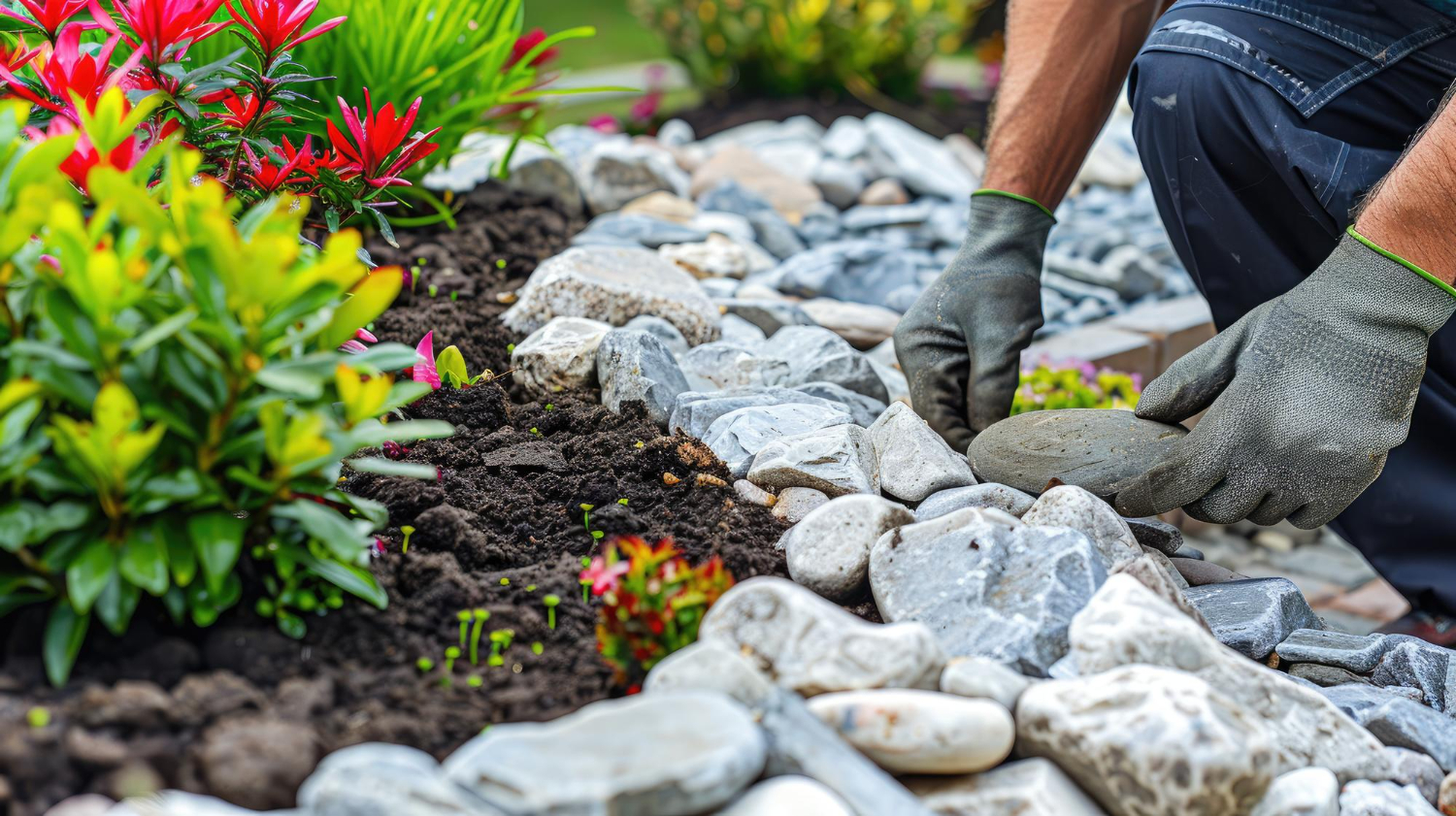
Shape plays a bigger role than most people expect. While smooth round stones might look pretty, they move around easily when wet. Flat or angular types grip the ground better and stay where they’re placed.
Here are some popular options for areas that get a lot of water or foot traffic:
- Flat stones like flagstone or slate that stack closer to the ground
- Angular gravel or crushed rock with sharp edges that hold their spot
- Tumbled granite or heavy river rock, especially in large sizes
It’s not just about picking the biggest rock. Smaller pieces in the right shape, packed close together, can actually form a tighter surface than larger ones with space between them. The key is balance. You want stones that look good with your design but won’t shift every time clouds roll in.
How Installation Methods Can Make a Big Difference
Sometimes it’s not the stone that’s the issue, it’s what’s beneath it. Stones need a firm foundation, especially in areas with seasonal rain. Skipping this step is like laying tile on soft sand.
To give your garden stone the best chance at staying put, consider a few basics:
- Level and compact the soil before laying anything down
- Add a sub-base of gravel or sand to support heavier stones
- Use edge restraints around walkways to reduce drifting
- For tighter fit areas, stabilize with sand or light mortar
Using these methods helps form one solid surface instead of a loose pile. If you’re laying a garden path or decorative outline, a little prep work makes it way easier to deal with occasional showers.
Best Places in Your Yard for Stable Stone Features
Some spots hold up better than others when it rains. If you’re planning a new stone area this spring, it’s worth thinking about where water tends to sit or flow after a storm.
Here’s what works well:
- Raised beds and paths that get full sun usually dry faster and drain well
- Flat areas near porches or patios where water won’t pool
- Sloped areas with support like edging, retaining blocks, or terraces
If you’re setting stone in a part of the yard where water naturally runs, you’ll need to think about directing water around it. Even a small change in soil height or a shallow trench nearby can help move water where it won’t do damage.
Natural grading paired with wide stones in the middle of the path gives rain somewhere to go without lifting the edges.
Maintenance Tips to Help Garden Stone Stay in Place
Once your stones are down and the rain hits, don’t forget about regular check-ins. Keeping things in place doesn’t take a lot of work, but it does take some attention after bad weather.
Here are a few ways to keep your stones right where they belong:
- After a storm, look for low spots or drainage channels forming
- Pull weeds or grass that grow between stones and lift parts of the layout
- Sweep rocks back into place right away if gaps start to open up
It’s easier to deal with a small shift now than a full reset later. Over time, these quick fixes help keep your garden neat without a major overhaul each season.
Keep Your Garden Looking Fresh All Season Long
Spring rain doesn’t have to undo all the planning and care that goes into garden prep. Picking the right stone style, installing it on a solid surface, and making small adjustments over time can keep everything stable.
With a little extra thought up front and a few smart choices along the way, garden areas built with stone can handle wet weather and still look sharp well into summer. The goal isn’t perfection, just something that works and stays put while you enjoy the season. From bulk gravel and pebbles to natural stone and decorative stone or gravel, we stock the materials local homeowners and contractors rely on to build outdoor spaces that last.
Add lasting structure to your yard this spring by using the right kind of garden landscaping stone to prepare for rainy weather. We know that stability starts with proper shape, size, and careful prep before any work begins. Whether your project involves a new garden bed, walkway, or decorative border, using quality materials helps avoid headaches later. At Mr. Pavers, we are ready to help you choose the best options for your space. Call us today to get started.