Designing Pebble Garden Paths That Stay Clean After Rain
Pebble Garden Paths That Look Great After Every Storm
Pebble garden ideas are fun until the first big spring rain turns your path into a muddy mess. Wet soil pushes up, pebbles wash out, and you end up tracking grit into the house. The good news is that a clean, dry-looking pebble path is not about luck; it is about smart design from the start.
Here, we will walk through how to plan and build pebble garden paths that drain well, stay tidy after storms, and feel good to walk on. We will cover layout, base prep, drainage tricks, and simple care so your path keeps its shape and color, even when clouds keep rolling through.
A well-built path does more than look pretty. It guides guests, connects outdoor spaces, and keeps feet out of soggy grass. When you plan the right structure underneath the stones, those nice pebble garden ideas turn into a path you can count on all year.
Plan Smart Before You Pour the First Pebble
Before anyone brings in a shovel, it helps to look closely at where water and feet already move in your yard. Notice where people naturally walk and where puddles stay the longest after a storm. That simple walk-around will save you a lot of fixing later.
Think through a few key points:
- How often will the path be used, and by whom?
- Will kids run on it with bare feet?
- Do you push wheelbarrows or carts through that area?
- Where does water flow during strong rain?
For layout, gentle curves usually feel more natural in a garden than short, sharp turns. Curves can also help you steer both people and water around low spots or away from your house. Straight runs can work well for side yards or narrow spaces, as long as you give water a clear way to escape.
When it comes to materials, it helps to separate “pretty to look at” from “comfortable to walk on.” Decorative pebble garden ideas might feature very smooth river stones, but those can roll underfoot. A better formula for a walking path is:
- A deeper layer of larger, compacted gravel as the base
- A thinner layer of smaller, decorative pebbles on top
The base gives strength and drainage, while the top layer gives you the look you like.
Build a Solid Base That Drains, Not Floods
Pebble paths fail when pebbles sit right on top of bare dirt. They sink, shift, and turn into mud after every rain. A path that stays clean starts with the right depth and a layered base.
For light foot traffic, you usually want to dig several inches below the final height of your path. Heavier use, like wheelbarrows or garden carts, calls for a bit more depth so you can fit a thicker base rock layer. Leave room for three parts:
- Compacted base rock or road base
- A thin bedding layer of sand or fine gravel
- Your visible pebble layer
The base rock should be dampened and compacted in layers so it locks together. This helps water drain through while keeping the surface firm. On top of that, a thin bedding layer lets you smooth out small bumps. Too much sand can trap water, so keep it thin.
Landscape fabric plays a quiet but important role. Placed under the base, it helps stop weeds from pushing through and keeps base rock from mixing into the soil. In some yards, a second layer of fabric on top of the base rock can help keep smaller pebbles from sinking over time, especially in softer, more open soils.
Choose Pebbles and Edging That Stay Put After Rain
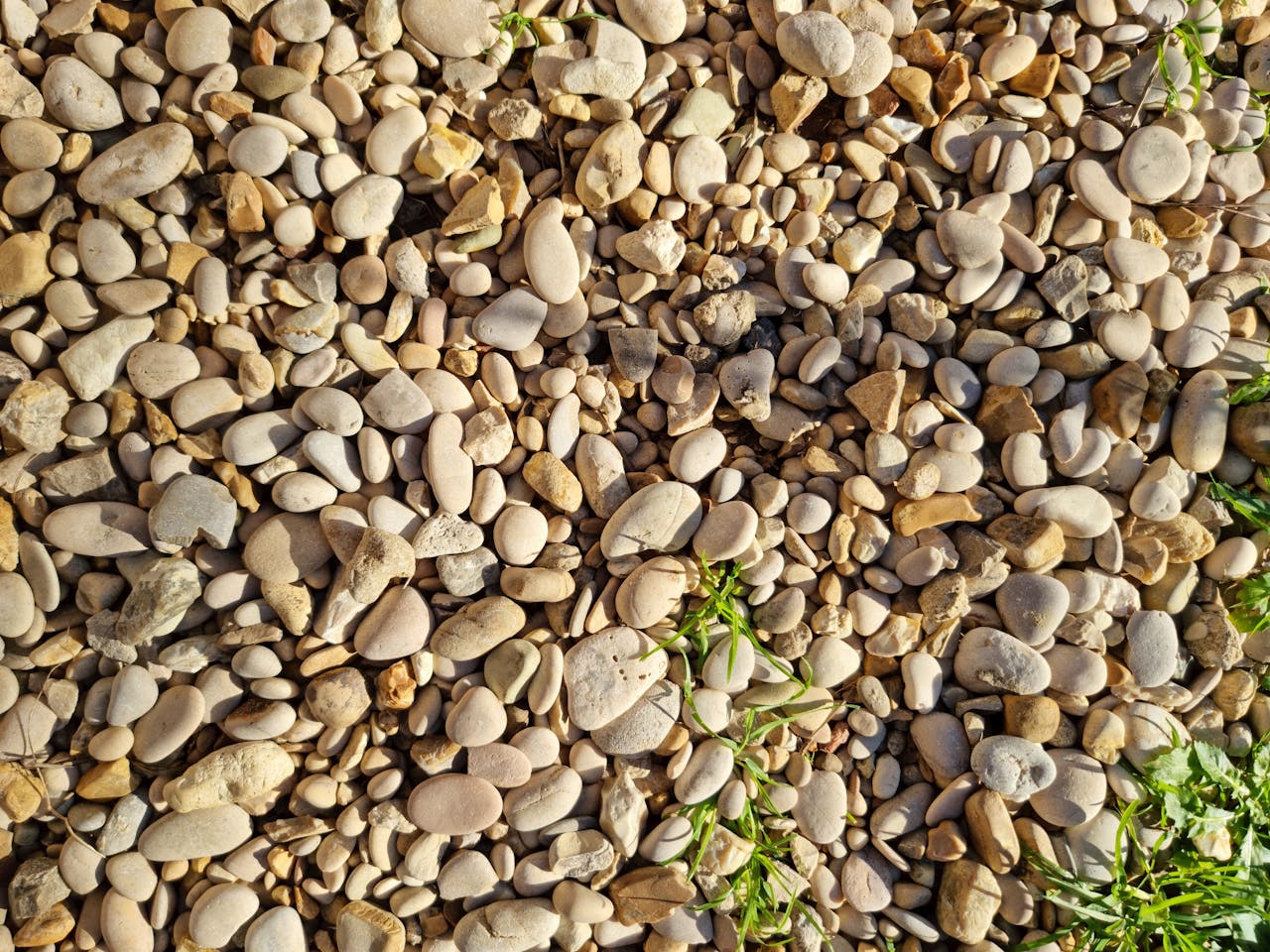
Not all pebbles behave the same when the clouds open up. Very round stones like polished river rock look nice but tend to roll and move with water. Mixed shapes or slightly angular pebbles grip each other better, which helps them stay in place once you rake them smooth.
Size matters too. Smaller pebbles feel kinder under bare feet but can migrate more easily if they are too deep. Larger stones drain well but can be uncomfortable if the path is used often. A shallow layer of small decorative pebbles over a firm base usually strikes a good balance.
Edging is what keeps a clean path from slowly spilling into your lawn or beds. Some common edging options include:
- Steel or aluminum edging for a slim, modern line
- Concrete or paver borders for a more built look
- Natural stone edging for a softer, garden feel
Good edging also helps direct surface water, acting like a gentle curb that keeps stones in and washes soil away from the path.
Style still matters. Try to pick pebble colors that echo your home, patio, or nearby stonework. Mixed tones can help hide small leaves, splash marks, and dust between cleanings, so the path looks tidy even when you have not swept in a bit.
Design Drainage Features That Keep Paths Clean
A pebble path should never be the lowest point in your yard. If it is, water will sit, and that is when mud and algae show up. Instead, shape the path so water moves off it quickly.
Two simple tricks help:
- Give the path a slight crown in the middle, like a tiny hump, so water sheds to both sides
- Or, tilt the whole path slightly to one side, toward a place where water can soak in or be collected
In spots where water naturally runs, you may need more than a gentle slope. Here, subtle drainage features can make a big difference. A French drain with perforated pipe under gravel, or a dry creek bed lined with larger river rock, can catch and move water away without looking like a drain.
Protecting nearby planting areas is just as important. When bare soil washes onto your path, it coats the pebbles and makes the whole space look dirty. Mulch, edging, or a border of small cobbles around beds helps hold soil in place so storms do not undo your hard work.
Easy Cleanup and Seasonal Care for Pebble Paths
Even a well-built pebble path needs a little attention after heavy rain. Small, simple habits keep it looking fresh.
Right after a storm, once the surface has dried a bit, a quick pass with a stiff broom or a leaf blower can clear leaves and twigs. If organic debris sits too long, it breaks down into fine soil that works its way between stones and turns into mud.
Now and then, you may notice small low spots or areas where pebbles have shifted. Light raking can even out the stones again. When the layer looks thin, adding a fresh top-off of matching pebbles brings back the original color and texture.
Each spring, a short inspection helps catch little problems before they become big ones. Walk your path and check:
- Is water draining off quickly, or are there puddles?
- Has the edging shifted or lifted anywhere?
- Are nearby beds dropping soil or mulch onto the path?
A few small fixes at this time of year will keep your pebble garden ideas looking crisp and ready for all the extra outdoor time ahead.
Bring Your Pebble Path Vision to Life This Spring
Spring is a great time to shape outdoor spaces, while the soil is workable and plants are waking up. Planning a pebble path now means you can enjoy a clean, comfortable walkway through the rest of the warm months, even when storms pass through again and again.
At Mr. Pavers, we love helping people turn simple pebble garden ideas into paths that actually work. With job-ready base rock, decorative pebbles, edging, and related materials, we support both DIY homeowners and contractors who want paths that stay stable and clean after every rain. A little thought at the planning stage, plus the right materials under your feet, can give you a garden path that looks freshly raked long after the clouds have cleared.
Get Started With Your Project Today
Ready to turn your outdoor space into a low-maintenance, eye-catching retreat? Explore our curated pebble garden ideas and let Mr. Pavers help you design a layout that fits your style, budget, and yard conditions. We will work with you to choose the right materials, shapes, and accents so your new garden feels intentional and enduring. Have questions or want a custom quote? Simply contact us and we will guide you through the next steps.