Keep Pebble Garden Paths Cool and Barefoot-Friendly in Los Angeles Heat
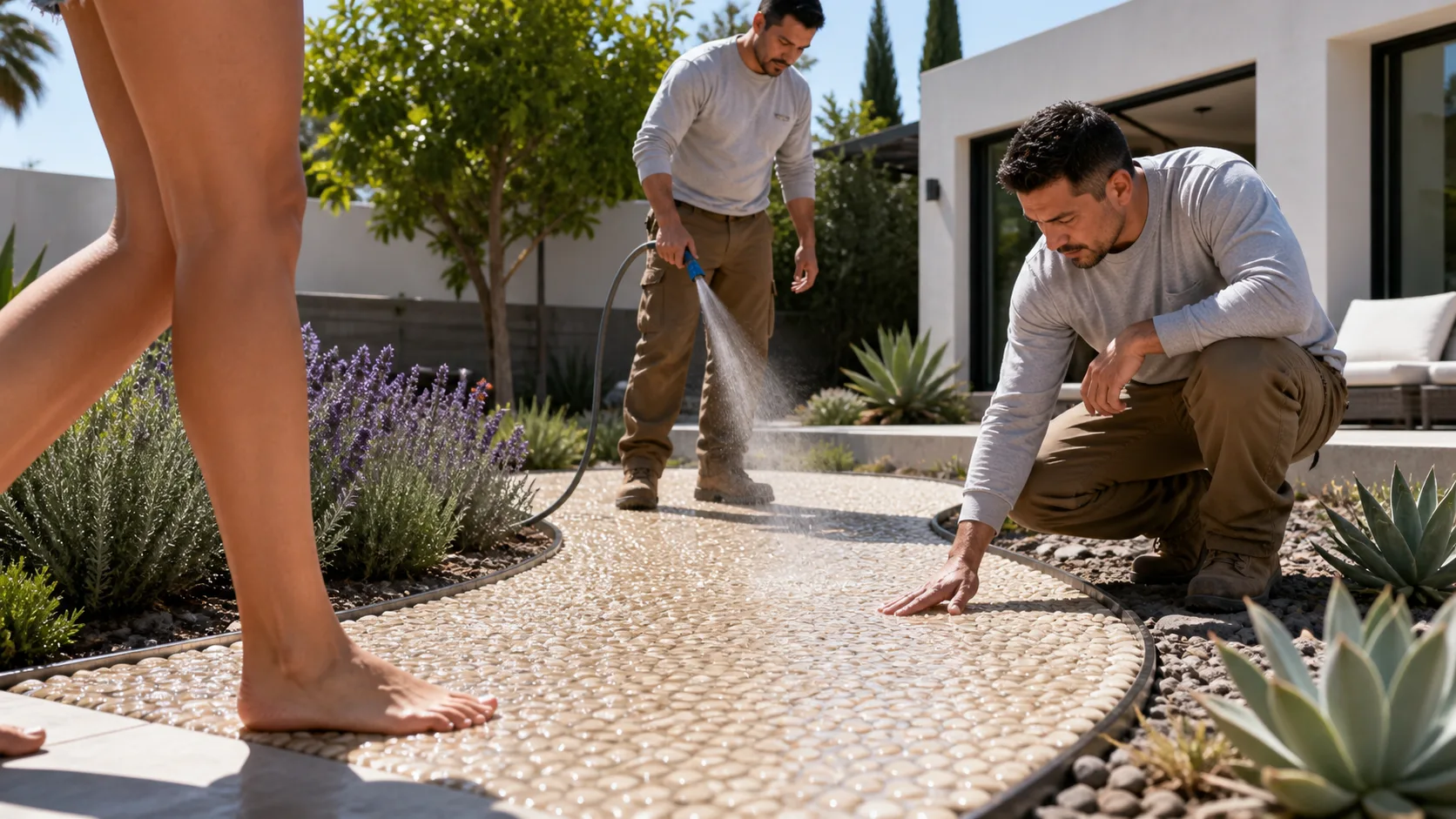
Enjoy Barefoot Paths Even on the Hottest LA Days
Pebble garden paths can look beautiful, but they are not much fun if they burn your feet by lunchtime. In Los Angeles, the sun can turn dark stones into little frying pans, even when the calendar says fall and kids are back in school. Many homeowners want a calm, beachy path where kids, pets, and guests can walk barefoot without doing the hot-foot dance.
Here in our area, long days of strong sun and dry air make surface choices really important. Some pebble mixes stay fairly comfortable, while others get hot fast. In this guide, we will walk through color choices, stone size, layout, shading, and simple ways to test surface temperatures so your pebble garden paths stay cooler and more inviting.
How LA Sun and Color Choices Affect Pebble Heat
Color is the first big factor in how hot your pebble garden paths will feel. Dark stones soak up more of the sun’s energy, so they heat up faster and stay hot longer. Light colors reflect more sunlight, so they feel cooler to the touch.
Los Angeles has a lot of clear sky days, strong UV, and plenty of direct sun, even through September and beyond. That constant exposure makes the difference between dark and light stones easy to feel. Two paths can be side by side, but the darker one will often feel much hotter in the afternoon.
Smart color strategies include:
- Choosing light beiges, creams, and soft grays instead of solid black or very dark charcoal
- Using mixed blends that include lighter stones so heat is not absorbed as strongly
- Avoiding long, unbroken stretches of dark rock in full sun
Even a small shift in tone can make walking barefoot feel more comfortable. When you look at pebble options, it helps to:
- Take samples outside into natural light, not just store lighting
- Place darker and lighter blends next to each other for a direct comparison
- Check how they look in sun and in light shade, since your yard has both
We always suggest setting the samples in sunlight for a few minutes, then touching them with the back of your hand. Your skin will tell you the truth much faster than the color name on a bag.
Choosing the Right Pebble Size and Texture for Comfort
Size and shape matter just as much as color. Large, flat, or sharp stones present more hot surface directly to your skin and create painful pressure points. Smaller, rounded pebbles spread that pressure and heat out more evenly.
For barefoot-friendly pebble garden paths, rounded stones usually feel best. Their curved sides are easier underfoot and do not poke as much. When they are packed well, they also move less, so you feel more stable and less like you are walking on marbles.
Good general guidelines:
- Aim for rounded pebbles in the 3/8 inch to 3/4 inch range for comfort
- Avoid very large river rock where children and pets will walk often
- Skip fractured or very angular gravel on paths where people might go barefoot
The base below your pebbles is a big part of comfort too. A solid, compacted layer, such as decomposed granite or sand, helps:
- Reduce wobble and shifting
- Keep the path more level and safe
- Support an even, cushioned feel across the whole surface
With the right base depth and a pebble layer that is not too thin or too thick, you get a path that feels firm but still gentle under bare feet.
Smart Layout, Shading, and Planting Around Pebble Paths
Even with the coolest color and size, any pebble path in full midday sun can heat up. That is where layout and shade planning come in, especially for late-summer and early-fall heat waves that are so common in LA.
If you are still in design mode, think about where the sun hits hardest. The south and west sides of a yard usually get the most intense sun in the afternoon. You can help your path stay cooler by:
- Avoiding long, straight runs in all-day southern exposure when possible
- Adding gentle curves so parts of the path pass under trees, pergolas, or shade sails
- Running paths along fences or walls that cast afternoon shade
Plants can also cool things without adding a lot of water use. Good strategies include:
- Drought-tolerant shrubs that cast dappled shade over parts of the path
- Low-water groundcovers hugging the edges, which cut glare and reduce reflected heat
- Container plants placed where their shadows fall on the hottest sections
You can also mix materials to break up large rock areas. For example:
- Concrete or stone pavers spaced within the pebbles to create cooler stepping pads
- Thin bands of mulch along one or both sides of the path
- Strips of artificial turf between pebble zones to soften the look and feel
These combinations let you keep the clean look of pebbles while giving bare feet some cooler resting spots.
Simple Ways to Test and Control Surface Temperatures
Before you commit to a full path, it makes sense to test how different pebbles behave in your actual yard. Simple checks can tell you a lot.
Easy home tests include:
- Hand test: Press the back of your hand on the surface for about five seconds. If it is too hot to leave it there, it is too hot for bare feet.
- Short barefoot test: Step on each sample for just a moment and notice how it feels compared to other options.
- Infrared thermometer: If you have one, take readings at a few times of day to compare colors, sizes, and shaded vs sunny spots.
A handy trick is to set small trays or bags of different pebble types in the sun for a few days. Place them where your future path will run. Check them:
- Around midday, when the sun is high
- In late afternoon, when LA yards often feel the hottest
Testing in late summer and early fall gives you an honest sense of how hot your path might feel during real heat waves.
Once your path is built, there are small things you can do when it gets extremely hot:
- Lightly mist the surface with water for short-term cooling
- Add temporary shade cloths, umbrellas, or pop-up canopies over high-traffic areas
- Lay down outdoor rugs or runners when you have guests using the path barefoot
These tricks will not change the base temperature of the stones, but they can make your outdoor space more comfortable on peak-heat days.
Build Your Cooler, Barefoot-Ready Path This Season
A comfortable pebble garden path in Los Angeles comes down to a few key choices working together: lighter color blends that reflect more sun, rounded mid-size stones for softer contact, a solid base for stability, thoughtful layout away from all-day exposure, and smart shading with plants and structures. When you add simple temperature testing before you commit, you can feel confident that your path will look great and still be friendly to bare feet.
Late summer and early fall are a great time to plan and build. The days are still hot enough for honest testing, but working conditions are usually easier than peak midsummer. At Mr. Pavers, we supply professional-grade pebbles, pavers, artificial turf, mulch, and base materials that are ready for weekend projects and built to handle Southern California sun. If you bring photos of your yard, rough measurements, and a sense of how you want to use your space, we can help match materials and colors to your sun exposure, shade plans, and comfort goals so your pebble garden paths stay cool, inviting, and ready for barefoot walking.
Get Started With Your Project Today
Transform your outdoor space with our expertly designed pebble garden paths that balance beauty and durability. At Mr. Pavers, we help you choose the right materials and layout so your garden path feels natural and inviting in every season. If you are ready to move from ideas to installation, contact us and we will guide you through the next steps.