Questioning the Use of Deck Concrete Blocks for Backyard Pergolas
Build a Backyard Pergola That Actually Lasts
Building a backyard pergola is exciting. You get extra shade, a spot to relax, and a place to gather with friends as days start to get a little shorter in the fall. Many homeowners start planning weekend projects around this time, hoping to finish before the busy holiday season kicks in.
A lot of people turn to the concrete deck block for pergolas. It looks simple: no digging, no mixing concrete, less mess, and less time in the sun. On the shelf, it feels like the perfect shortcut for a freestanding structure.
But is a concrete deck block really the right base for a pergola that should stand strong through wind, rain, and changing seasons? Or is it a quick fix that can shift, lean, and cause problems later? Let us walk through what these blocks are meant for, where they fall short, and what you can do instead for a pergola that actually lasts.
What Concrete Deck Blocks Are Meant to Do
A concrete deck block is a precast chunk of concrete with a slot or pocket on top. That slot holds wood, usually a beam or post, and the wide base spreads weight across the ground. They are easy to move, easy to place, and made to support light structures.
Most deck blocks are designed for:
- Small, low decks close to the ground
- Simple stairs or entry platforms
- Short-term or seasonal platforms
- Projects where loads are fairly even and low to the ground
They are not always built with tall vertical loads in mind, like the long posts of a pergola that reach up and catch wind. A pergola roof, even if it is open, acts like a sail when wind hits the side. That side load tries to push, pull, or twist the base.
Soil and drainage change everything too. Some yards have firm, compact soil that stays put. Others have softer ground or clay that holds water. When soil gets wet, it can soften and move under a small point of pressure, like a concrete deck block.
Local building codes may also limit where and how a concrete deck block can be used. The package might show a happy sketch of a deck or pergola, but that picture does not always match what your yard, your soil, and your wind conditions ask for. That is why many pergola projects need more than just a few blocks dropped on the ground.
Where Deck Blocks Fall Short for Pergolas
Concrete deck blocks can work for certain small projects, but pergolas bring extra stress. The taller and wider the structure, the more those stresses matter.
Here are common problems we see when pergolas sit only on deck blocks:
- Blocks shift on soft or unprepared soil
- Posts work loose and start to lean
- The whole structure rocks when pushed or in a strong wind
When storms roll through with heavy rain, the ground can stay damp for days. Saturated soil loses strength. A single block can slowly sink on one corner as the soil gives way. That tiny tilt at the base turns into a wide lean at the top of a tall pergola post.
Side loads are another big issue. A pergola catches wind from the side and sometimes from below. If the posts are not firmly attached to a deeper footing, the structure can rack and twist. Deck blocks usually just sit on the surface, so they do not give much resistance to uplift or sliding.
Over time, this can lead to:
- A pergola that leans or feels wobbly
- Gaps between posts and paver joints
- Cracks or trip points in the hardscape around the structure
The result is not only a safety concern; it also ruins the clean, finished look you worked so hard to create. The time you saved at the start often shows up later as extra repairs and adjustments.
Smarter Foundation Options for Stable Pergolas
If you want a pergola you can enjoy season after season, a stronger foundation is the smart move. Several options offer better support than a basic concrete deck block.
Common choices include:
- Buried concrete footings with post bases
- Helical ground anchors that screw into the soil
- Paver-based systems built on compacted gravel and stone
Buried concrete footings go below the loose top layer of soil into more stable ground. With the right post brackets and hardware, they hold posts against movement in all directions. Helical anchors can be a good fit when access is tight, since they do not require large holes or big pours.
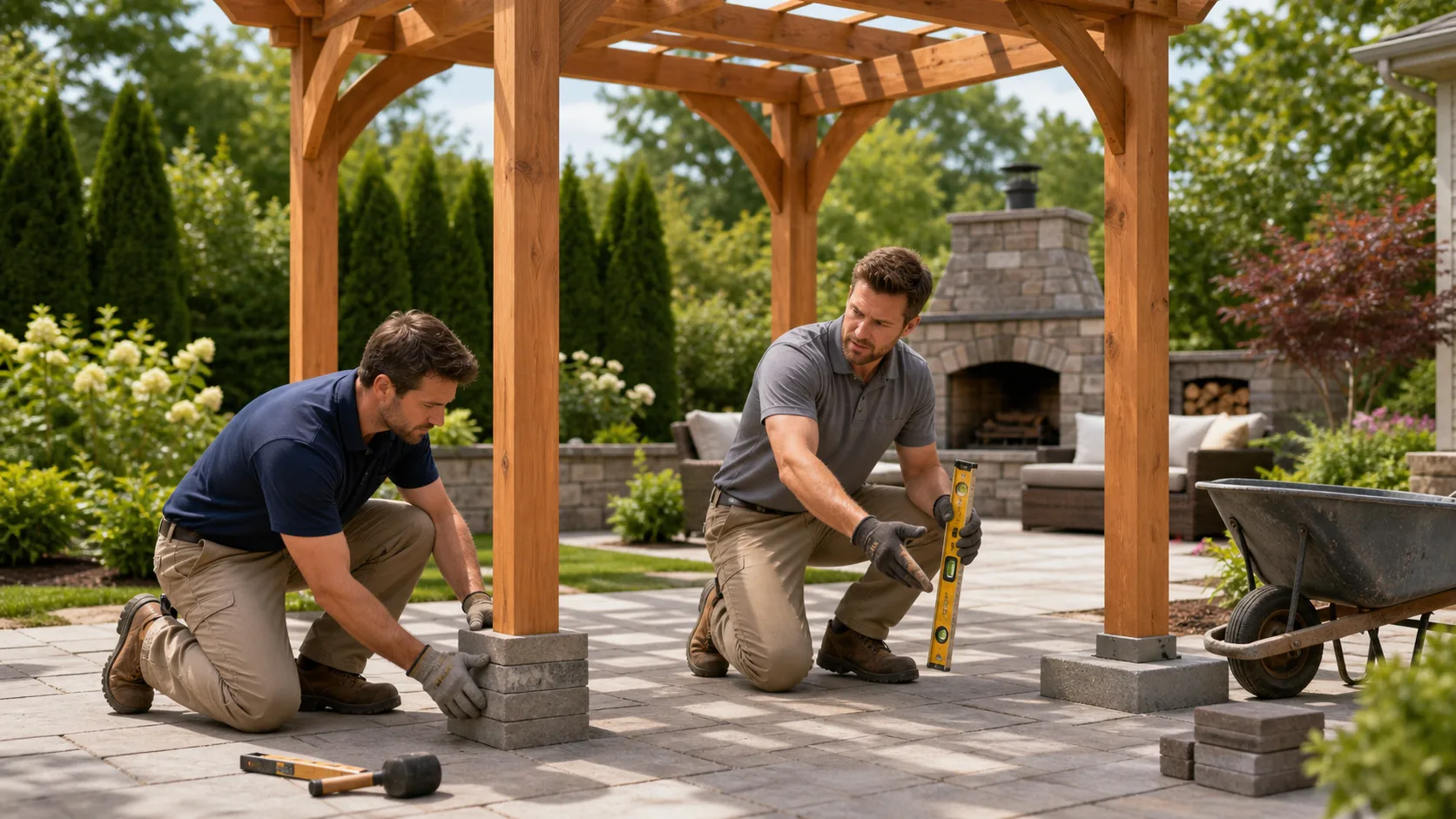
A paver-based system can also work well when it is built correctly. Instead of scattered blocks, you create a unified base of compacted gravel, sand, and pavers. The pergola posts then tie into that base or into separate footings that line up with the patio.
When your pergola foundation connects with your patio or stone area, everything works as one:
- Layout is more accurate
- Posts line up with paver patterns
- Drainage can be planned so water flows away
Using the right base materials, like compacted gravel under pavers or footings, helps keep the ground stable, even through cycles of wet and dry. That stability is key if you want straight posts and tight joints over the long term.
Using Concrete Deck Blocks the Right Way
Concrete deck blocks are not always the enemy. They just need to be used in the right situations and with realistic expectations.
They can make sense for:
- Very small, low shade frames
- Temporary, seasonal structures you do not mind taking down
- Accent features tucked close to a wall or fence away from strong wind
If you do use deck blocks, a few safeguards help reduce problems:
- Prepare a compacted gravel pad under each block for better support
- Keep the structure low and tight to the ground
- Tie multiple blocks together with framing so they act as one unit
- Inspect the pergola often for settlement, looseness, or tilt
Once you start adding extras like lighting, fans, or an outdoor kitchen nearby, the stakes get higher. At that point, loads are heavier and movement is not just annoying, it can be unsafe. That is when it makes sense to speak with local code officials or a professional builder so your foundation matches what the structure must carry.
Design a Pergola Foundation Plan You Can Trust
The strongest pergolas start on paper, not in the yard. Before buying a kit or loading lumber into your truck, it pays to plan the base. Height, width, number of posts, and roof style all affect what kind of support you need.
At Mr. Pavers, we help homeowners and contractors pair pergola designs with the right materials underfoot. That might mean supplies for concrete footings, the right gravel for a stable base, or pavers and stone that tie the whole outdoor area together. A good plan starts with a simple sketch, basic dimensions, and a quick look at your soil conditions.
When you treat the foundation as the first design step, your pergola is far more likely to stay straight, solid, and comfortable to use in every season. Instead of relying on a concrete deck block alone, you give your structure a base you can trust, so your backyard space feels welcoming every time you step outside.
Transform Your Outdoor Space With Durable, Ready-to-Use Materials
Upgrade your project with the strength and convenience of a concrete deck block designed to make building faster and more reliable. At Mr. Pavers, we provide high-quality products that help you create a stable, long-lasting deck or outdoor structure with confidence. If you have questions about quantities, installation, or choosing the right materials, contact us so we can help you move forward with the right plan.