How Contractors Compare Wholesale Artificial Grass in Los Angeles
How Contractors Compare Wholesale Artificial Grass in Los Angeles | Jurupa Valley | Mr. Pavers Garden & Supply
Plan Smarter Turf Purchases Before the Job Starts
Choosing wholesale artificial grass in Los Angeles takes more than comparing the price on a roll. The turf you select can affect your installation schedule, crew efficiency, finished appearance, and the client’s long-term satisfaction. We recommend starting with the job itself, then comparing products that fit the site, expected use, and installation plan.
At Mr. Pavers, we help contractors and DIY customers source job-ready materials for residential and commercial outdoor projects. Artificial turf, aggregate, natural stone, pavers, decorative rock, mulch, and other materials often work together, so it helps to think about the entire scope before placing an order.
A turf product that seems like a simple choice can create trouble if it is not available when the crew needs it, does not drain well, or does not fit the way the space will be used. A consistent comparison process helps you avoid surprises and make clearer recommendations to clients.
Match Artificial Turf to the Project
Every project asks something different from artificial grass. Before comparing colors or blade styles, we suggest identifying how people, pets, and outdoor furniture will use the area. A front yard designed for curb appeal has different needs than a busy pet run or a rooftop sitting area.
Common project types include:
- Front and back yards where realistic color and a full appearance may matter most
- Rental properties where durability and easy upkeep may guide the selection
- Commercial spaces that may need turf built for regular foot traffic
- Pet areas that need dependable drainage and easier cleanup
- Play spaces and putting greens that have their own feel, surface, and performance needs
Pile height plays a large role in the finished look. Shorter blades can work well in active spaces and clean, modern designs. Taller turf can create a fuller lawn-like appearance in decorative residential areas. Color variation, thatch layers, and blade shape also change how natural the product appears once it is installed.
Client expectations should stay part of the conversation. For a rental property, a dependable mid-range choice may make more sense than a product designed for a high-visibility outdoor living area. When the product matches the purpose, it is easier to deliver a result that feels right for the property.
Review Turf Specs for Long-Term Performance
Artificial turf can look similar from a distance, but its product details can lead to very different results over time. We encourage you to compare written specifications, not just a showroom sample or product photo.
Face weight refers to the amount of yarn in the turf. In general, it helps you compare how substantial one product is against another. Density describes how closely the yarn fibers are packed together. A denser product can create a fuller look and may better handle regular use, depending on the application.
Pay close attention to:
- Pile height and density for the look and traffic level of the space
- Backing construction for stability during installation and everyday use
- Drainage details for pet areas, gathering spaces, and locations exposed to water
- UV resistance and yarn materials for regular sun exposure
- Warranty terms, including what concerns are covered and what conditions apply
Backing and drainage deserve extra attention. Quality backing helps the turf stay in place, while drainage affects how water moves through the surface. Base preparation must support that drainage plan, especially in areas where pets, outdoor entertaining, or irrigation are part of the design.
Sun exposure is another practical factor in Los Angeles. Turf should be made to maintain its color and structure under regular sunlight. Before making a final selection, we recommend reviewing warranty language carefully instead of assuming every product has the same coverage.
Compare Total Material Value, Not Just the Roll
A productive turf comparison includes every material needed to complete the installation. Focusing only on the turf roll can lead to missed items, extra crew time, or changes after work has already started. We find that a complete material list makes planning cleaner from the beginning.
Depending on the design, an installation may call for:
- Base material or decomposed granite
- Weed barrier, bender board, nails, and fasteners
- Seaming tape and adhesive
- Infill or sand
- Decorative rock, pavers, or natural stone around the turf area
Roll widths and planned cuts also matter. The right layout can reduce excess material, limit visible seams, and make the finished area look more continuous. Curves, narrow side yards, access paths, steps, and irregular property lines should all be considered before material is selected.
Labor is part of the value equation, too. Turf that is hard to seam, difficult to secure, or poorly matched to the base can slow down installation. Compatible materials and a clear layout help crews work more smoothly and can reduce the chance of post-installation concerns.
Verify Inventory, Samples, and Supplier Support
A dependable material source helps keep a project on track. Before you commit to an installation schedule, confirm that the turf you want is available in the amount needed for the full job. It is also smart to ask about matching material if the scope changes after work begins.
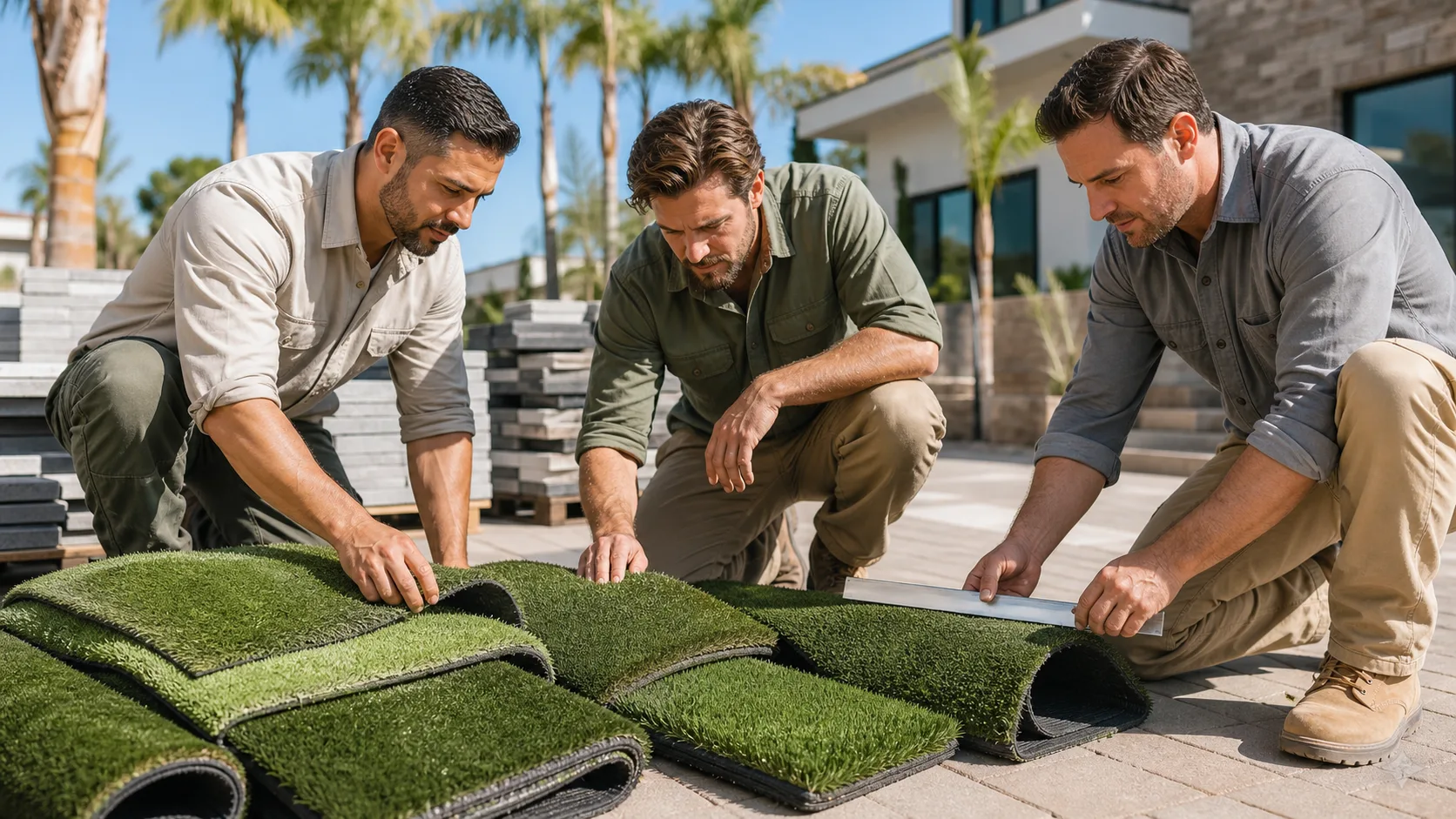
Seeing samples in person can prevent awkward surprises. Photos do not always show true color, texture, blade shape, or density. When you can compare products side by side, it becomes easier to explain the differences to a client and choose a turf that fits the surrounding hardscape and plant materials.
We also recommend planning material coordination early. A turf installation may require more than one product category, and having the full order organized helps prevent unnecessary pauses between phases of the work. Keeping related materials aligned with the project plan supports a cleaner, more professional result.
Build a Reliable Artificial Turf Supply Plan
The best wholesale artificial grass in Los Angeles is the product that fits the property, expected use, installation method, and full material plan. Start with clear measurements, note drainage and access conditions, and identify what matters most to the client before narrowing down the choices.
A thoughtful comparison protects the finished project from avoidable problems. When turf specifications, roll layouts, supporting materials, and supplier availability are considered together, you can make better decisions before the crew arrives on site.
Get Materials That Fit Your Project
At Mr. Pavers, we help contractors source wholesale artificial grass in Los Angeles with options suited to their project requirements. Our team can help you compare turf styles, quantities, and complementary materials for a more streamlined order. When you are ready to discuss your needs, contact us for assistance.