Stepping Stone Supplier Choices That Prevent Wobbly Walkways
Stepping Stone Supplier Choices That Prevent Wobbly Walkways | Jurupa Valley | Mr. Pavers Garden & Supply
Build a Walkway That Feels Solid Underfoot
A stepping stone path should feel steady, safe, and purposeful every time someone walks across it. When stones rock, sink, crack, or sit at awkward heights, even a good-looking path can become a source of frustration.
We believe a stable walkway starts well before the stones are set in place. Stone selection, base aggregate, bedding material, drainage, edging, and spacing all affect how the finished path performs. For Los Angeles DIY homeowners and trade professionals, choosing the right materials together can help prevent avoidable repairs later.
Choose a Stepping Stone Supplier with Reliable Stock
Appearance matters, but it should not be the only thing you consider when choosing a stepping stone supplier. A single beautiful stone is not very helpful if the rest of the walkway cannot be matched in color, thickness, or style.
Natural stone can vary from piece to piece. That variation can create a relaxed, organic look, but it also means you may need to account for differences in shape, texture, and height. Manufactured concrete stepping stones and pavers often provide more consistent dimensions, which can make it easier to maintain even joints and walking surfaces.
Before materials are selected, we recommend confirming a few practical details:
- Whether enough matching stones are available for the full path
- Whether base aggregate, bedding sand, and edging are available at the same time
- Whether replacement materials may be available if a future repair is needed
- Whether the selected stone works with the planned traffic level and path design
At Mr. Pavers, we stock hardscape, aggregate, stone, paver, turf, and garden materials for homeowners and trade professionals. Bringing the full material system together from one source helps you coordinate the layers beneath and around the stepping stones, not just the visible surface.
Match Stone Thickness to the Walkway Base
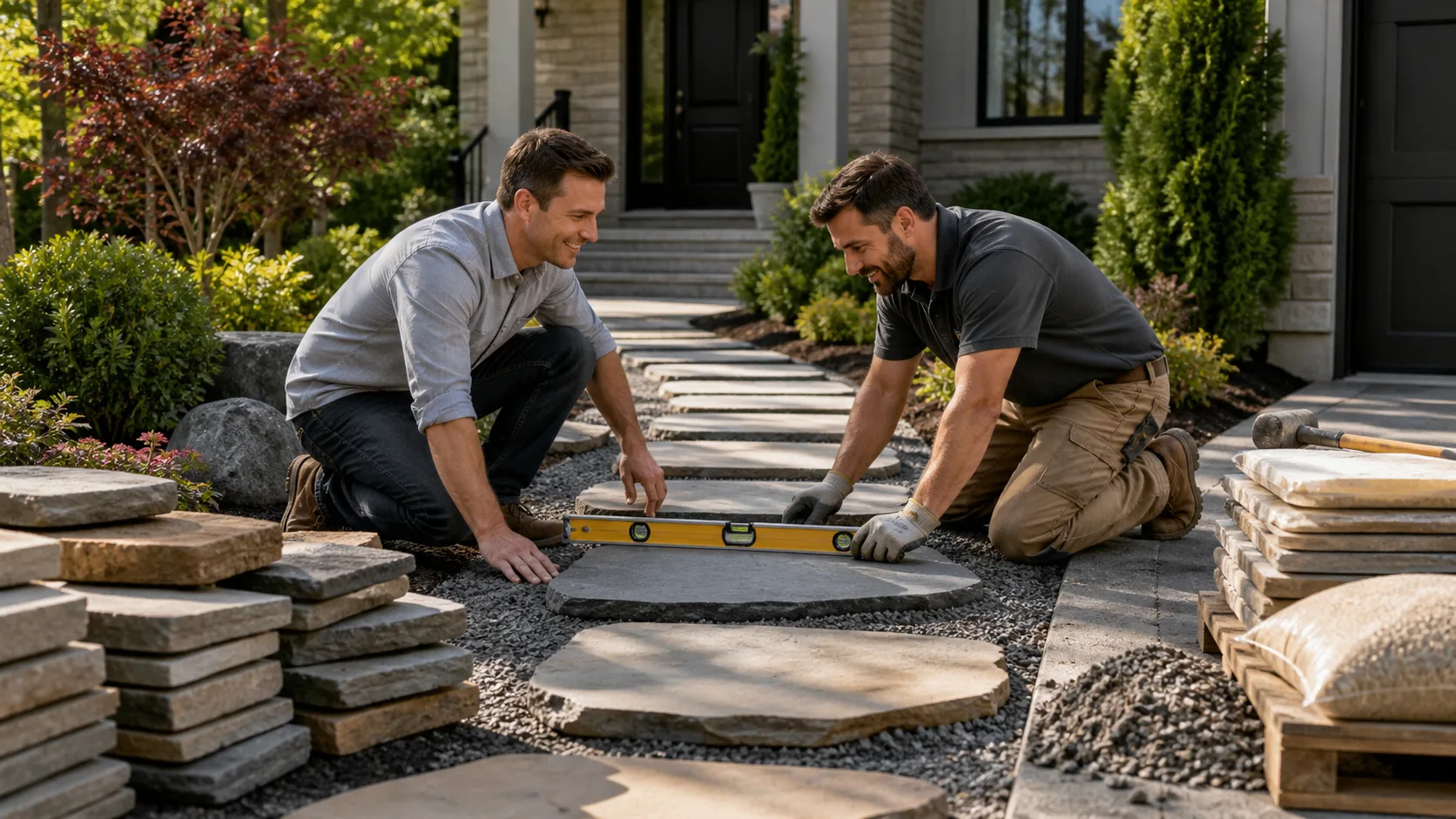
Thin stones placed directly over loose soil are more likely to move underfoot. Soil shifts, roots grow, water travels through the ground, and repeated foot traffic can all leave a stone uneven or loose. The thickness and weight of the selected material should make sense for the walkway’s intended use and the support beneath it.
A compacted crushed aggregate base helps spread weight and reduce movement. A bedding layer can then help bring each stone to a more even final height. The exact materials and depth depend on the stone type and site conditions, so it is wise to discuss the plan with an experienced supplier or installation professional before materials are brought home.
Different stone styles call for different approaches. Irregular flagstone often needs individual attention because each piece has its own edges and thickness. Uniform stepping stones and pavers can create more predictable joints and elevations. Neither look is automatically better, but each needs compatible support materials.
Los Angeles properties can also present site-specific concerns, including sloped yards, existing tree roots, hard soil, and areas where water naturally collects. We encourage you to bring measurements and photos so we can help you compare stone and aggregate options that fit the conditions you are working with.
Select Surface Textures That Improve Footing
A path can be level and still feel unsafe if its surface is too smooth. The face of each stepping stone should offer enough grip for family members, guests, and service workers moving through the property.
Natural cleft stone, textured concrete, and tumbled pavers often provide more traction than highly polished materials. A smooth finish may look refined in a display area, yet it may not be the best fit for a heavily used route near an entry, outdoor kitchen, pool area, or garden gate.
Stone size and shape matter as much as texture. Larger pieces usually give people a more comfortable place to land their feet. Stones that are narrow, undersized, or spaced too far apart can make walking feel awkward. Irregular edges can be attractive, but the walking area still needs to be broad enough and stable around the perimeter.
When comparing options, think about how the path will actually be used:
- A driveway-to-entry route may need wide, consistently spaced stones
- A pool or patio connection may benefit from flatter surfaces with reliable footing
- A garden path can have a more natural shape while still allowing a comfortable stride
- A service route may need materials that handle frequent use without shifting
We can help you weigh these practical needs alongside the color, shape, and style you prefer.
Plan Drainage and Edging Before Installation Begins
Water movement is one of the common reasons stepping stones become uneven. When water gathers beneath a stone, washes away bedding material, or softens the ground around the path, the support underneath can change. Even quality stones can wobble when the layers below them are not contained and properly prepared.
A gentle grade away from structures helps move water in the right direction. Base compaction also helps reduce settling beneath individual stones. For paths set within gravel, decomposed granite, or other loose materials, containment around the edges can keep joint material from drifting into the walking surface.
The full walkway system may include:
- Crushed aggregate for a stable base
- Bedding sand or another suitable leveling material
- Decomposed granite or joint material around the stones
- Landscape fabric where appropriate for the planned installation
- Edging to help contain loose materials
Choosing these products together makes it easier to avoid mixing materials that do not support the same design. A stable path is not created by the stepping stones alone. It depends on how the base, joints, edges, and drainage work as a whole.
Bring Home Materials That Support Every Step
A walkway feels better underfoot when its materials are chosen with the full system in mind. Stone thickness, surface texture, spacing, aggregate support, edging, and water flow all play a part in keeping each step level and secure.
Bring your path measurements, photos of the area, and a clear idea of how the route will be used. With those details, it is easier to compare stepping stone options and select the supporting materials that help the finished walkway stay polished, stable, and comfortable over time.
Find Stones That Fit Your Walkway Plan
At Mr. Pavers, we can help you compare styles, sizes, and materials suited to your project. Browse our selection from a trusted stepping stone supplier to find options that support a more secure, finished-looking path. If you have questions about availability or product details, contact us and our team will be glad to help.