Question-Based Gravel Garden Design for Entertaining Patios
Build a Fall-Ready Patio Oasis with Gravel Garden Design
A gravel garden design patio can turn a plain yard into an easy, inviting spot for fall get-togethers. With the right mix of gravel, pavers, and plants, you get a relaxed space that looks clean, drains well after those short rain showers, and stays ready for guests almost all year.
In warm climates like California, October evenings are still great for being outside. Friends come over after school or work, kids run around, and someone always ends up at the snack table. A gravel-based patio makes all of that simpler. Water soaks into the ground instead of puddling, there is no muddy lawn to worry about, and the style fits both casual and modern homes. With decorative gravel, pavers, edging, stone, mulch, and turf, you can build a low-stress entertaining area that feels like an outdoor living room.
What Kind of Entertainer Are You Outdoors?
Before you pick colors and shapes, it helps to ask: how do you actually use your patio? Different entertaining styles work better with different layouts.
Think about questions like:
- Do you like small, calm dinners with a few close friends?
- Do you host big game-day watch parties or birthday gatherings?
- Do kids need open space to play while adults sit and talk?
- Do you enjoy quiet evenings with music and a glass of wine?
If you enjoy cozy dinners, you might want:
- A smaller gravel area with a paver pad just big enough for a bistro set
- A corner fire pit circle edged with stone
- String lights over a compact seating zone
For bigger gatherings or watch parties, a better layout might be:
- A wide paver zone for a full dining set or outdoor sofa
- Surrounding decomposed granite for extra movable chairs
- Open gravel areas where people can stand and mingle
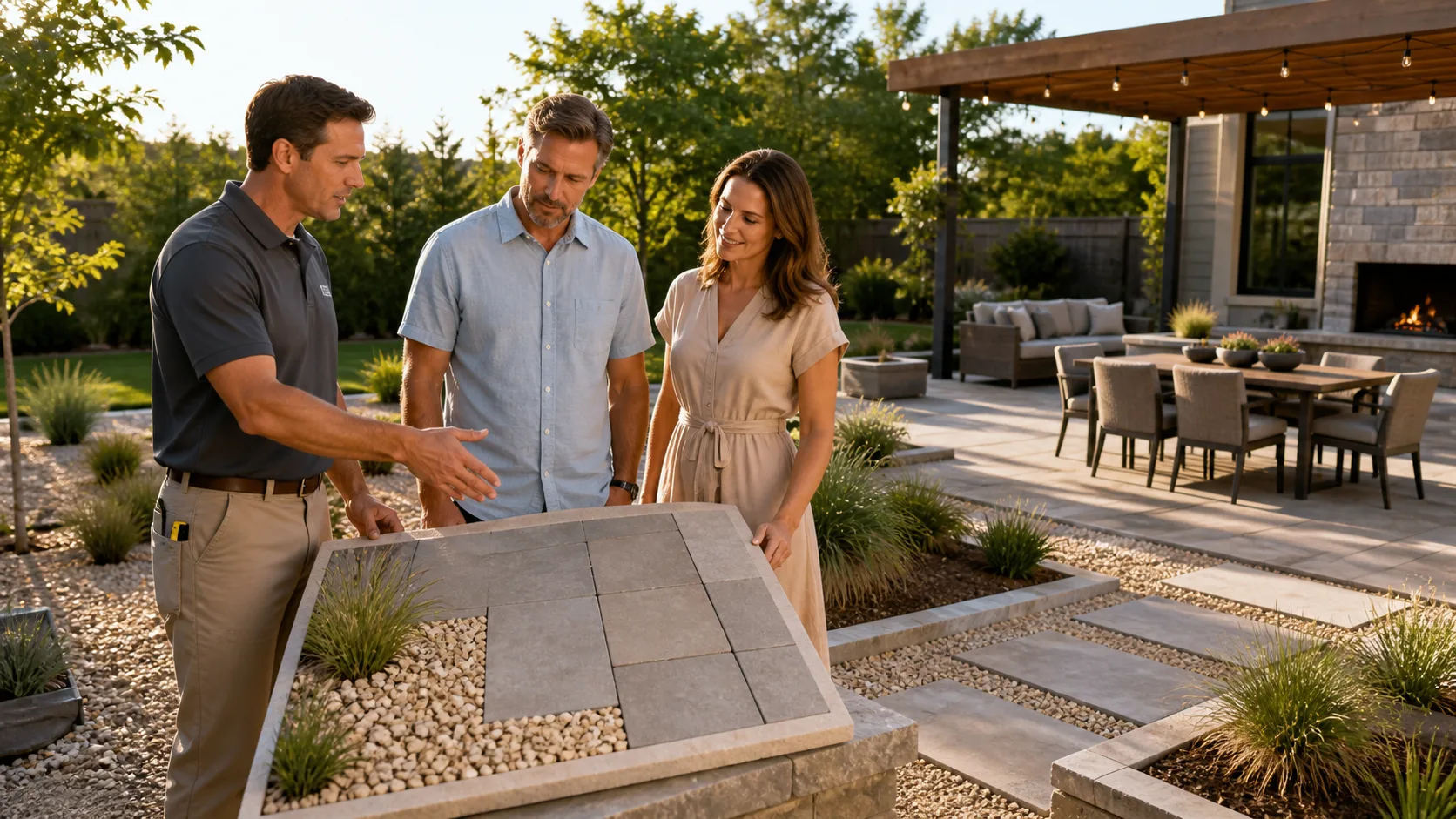
Gravel garden design is flexible. Pavers give you a solid, wobble-free surface under dining tables and grills. Decomposed granite can cover larger areas and still feel firm underfoot, so guests can move chairs as needed. Stepping stones help guide traffic so people are not trampling plants to reach the drinks or food.
How Do You Want Your Gravel Patio to Feel and Function?
Next, think about mood. What do you want guests to feel as soon as they step outside?
Some common styles include:
- Modern and minimal, with clean lines and simple colors
- Mediterranean-inspired, with warm stone and herbs in pots
- Rustic, with natural rock, wood accents, and textured gravel
- Lush, with plenty of plants softening the hard surfaces
Gravel works with all of these. Light-colored gravel and smooth rectangular pavers feel modern. Warmer tones and rounded stone feel more Mediterranean or rustic. Plants in the right spots keep the patio from feeling too hard or dry.
Then think about how the space needs to work:
- Do you need clear walkways so guests know where to walk?
- Do you want a safe, flat area for a grill or outdoor kitchen?
- Is there a spot for a portable fire pit or chat area?
- Do allergies matter, so you prefer low-pollen or low-mess plants?
Material choices shape both the look and the use. Different gravel colors can highlight paths or seating zones. Paver shapes and patterns can mark where the dining area stops and the lounge area starts. Stone borders can frame planting beds and keep gravel from spreading into them. You can also break up long stretches of gravel with strips of artificial turf so the patio feels softer underfoot while still staying low maintenance.
Which Gravel, Pavers, and Plants Match Your Climate?
Gravel garden design should always respect your local climate and yard conditions. In warm areas, fall still brings strong sun and the occasional heavy rain, so you want a patio that handles both.
Ask yourself:
- How sunny is the patio in the afternoon?
- Does water pool in any corner of the yard?
- Is the soil already well-drained, or does it stay damp?
- How much time do you honestly want to spend on upkeep?
For dry, sunny spots, lighter gravel can keep the area from feeling too hot and bright. In places with more shade, slightly darker tones can add warmth. Gravel size matters too. Finer materials like decomposed granite can create smooth, compact surfaces that work well for walking and placing furniture. Larger decorative gravel can look great in borders and accents.
Paver styles can match your home and also support good drainage. You can pair paver pads with surrounding gravel so water has somewhere to go instead of sitting on top. Around plants, mulch helps protect roots and keep moisture in the soil during warmer fall days. Drought-friendly plants and stone accents fit especially well in a gravel garden and keep things looking neat with less trimming.
How Will Guests Move, Sit, and Gather in the Space?
A patio feels better when it is easy to understand where to walk and where to sit. Before you pick materials, walk your yard and ask:
- Where do people usually enter the yard?
- Where do you like to sit or stand now?
- Where could a grill, bar cart, or serving table go?
- How can guests reach those spots without stepping through plants?
You can use a mix of gravel and pavers to set clear zones:
- Solid paver pads under dining tables, grills, and outdoor bars
- Gravel or decomposed granite lounge areas with flexible seating
- Stepping-stone paths that tell guests exactly where to walk
Edging gives the patio a finished look and keeps gravel in place along paths and around paver pads. Boulders and low stone walls can mark off gathering spots, hold extra seating, or create a backdrop for string lights. With a little planning, the space feels open and casual, but still organized enough that guests are not cutting across planting beds all night.
What Is Your Budget, Timeline, and DIY Comfort Level?
Finally, be honest with yourself about how much you want to take on at once. Fall is a busy season, with school events, sports, and holidays coming up quickly.
Ask:
- How much work do you want done before your next big gathering?
- What parts of the yard can wait until later?
- Do you want to handle small upgrades yourself, or bring in a pro for most of it?
Some changes are a bit friendlier for handy homeowners, such as:
- Adding a simple decomposed granite layer around an existing patio
- Refreshing gravel in worn paths and seating corners
- Placing new stepping stones to clean up traffic flow
Larger projects, like expanding a paver patio or building a fire pit area or seating wall, may call for professional help so the base, grading, and edges are done right the first time. Bulk gravel and decomposed granite work well when you need to cover larger areas. Modular pavers can be installed in phases over time, starting with the most-used zones. With the right materials and a clear plan based on your answers to these questions, your gravel garden design patio can grow with you, season after season.
Get Started With Your Project Today
Transform your outdoor space into a low-maintenance, beautiful retreat with our expert gravel garden design services. At Mr. Pavers, we work closely with you to create a layout, choose materials, and finalize details that fit your style and budget. If you are ready to move from ideas to a real plan, reach out and let us guide you through each step. You can contact us today to schedule a consultation and start designing your new garden.