Late-Summer LA Garden Path Maintenance: Heat-Safe Jointing and Drainage Fixes
Get LA Garden Paths Ready Before Fall Rains Hit
Late summer in Los Angeles is tough on garden paths. The soil is dry and compacted, dust hangs in the air, and pavers or gravel paths have taken months of foot traffic, sun, and irrigation overspray. If those paths are already loose, uneven, or dusty now, the first real fall rain can turn small issues into big messes.
Early fall is the sweet spot to get ahead of those problems. This is when it makes sense to tighten joints, refresh garden path materials, cut down dust, and tune up drainage before storms bring puddles and erosion. A little attention now can mean safer, cleaner walkways for the rest of the year.
At our supply yard in the Los Angeles area, we help both DIY homeowners and contractors pick job-ready hardscape and landscape materials that handle our long dry spells and quick showers. In this guide, we will talk about three late summer priorities: heat-safe jointing, low-dust surface strategies, and quick drainage fixes that keep water moving where it should go when fall rains arrive.
Inspect Your Path Before You pick up a Shovel
Before making changes, it helps to really study what is going on with your garden path. A slow walk along the path tells you a lot.
Look and feel for:
- Loose or rocking pavers underfoot
- Gaps between pavers or stones getting wider
- Edging that has shifted or tilted
- Sunken or raised spots that feel like trip hazards
Pay attention to every layer you can see. Check pavers, gravel or decomposed granite, edging, and any exposed base rock. When garden path materials move, it usually shows up in those spots first.
Heat and long dry periods can also leave their mark. As you walk, note:
- Pavers that look faded or chalky from UV exposure
- Cracked joints that no longer hold sand or stone in place
- Decomposed granite that has turned into loose powder
- Dry, dusty areas that leave footprints or dust clouds when you step
These dry surfaces may look harmless now, but once rain hits, the same fine particles can turn into slick mud.
Next, look for moisture clues. Even in late summer, irrigation and hose water tell you where drainage already struggles:
- Spots where water from sprinklers tends to pool
- Dark stains or rings on pavers from standing water
- Plant roots creeping under or lifting sections of the path
- Edges where water has washed away fines or base rock
Mark or note these areas. These are usually the key places where quick drainage improvements do the most good before the first big storm.
Heat-Safe Jointing That Survives LA’s Late Summer
When you are working with jointing sand, polymeric sand, or fine gravel, timing with the heat matters. Midday sun in late summer can dry materials too fast. That can lead to weak joints, surface cracking, or poor bonding.
If possible, plan joint work for:
- Early morning after the surface has cooled
- Late afternoon or early evening as the path goes into shade
That slower drying time helps jointing materials settle, lock in, and cure the way they are meant to.
Choosing the right joint filler depends on your garden path materials:
- Traditional jointing sand for many concrete pavers with standard joints
- Polymeric sand for tighter joints and better weed resistance between pavers
- Fine gravel or small stone chips around larger natural stone or stepping stones
Joint width and depth are important. Narrow, shallow joints often fail quickly, while deep, filled joints are better at keeping weeds out and holding the path stable.
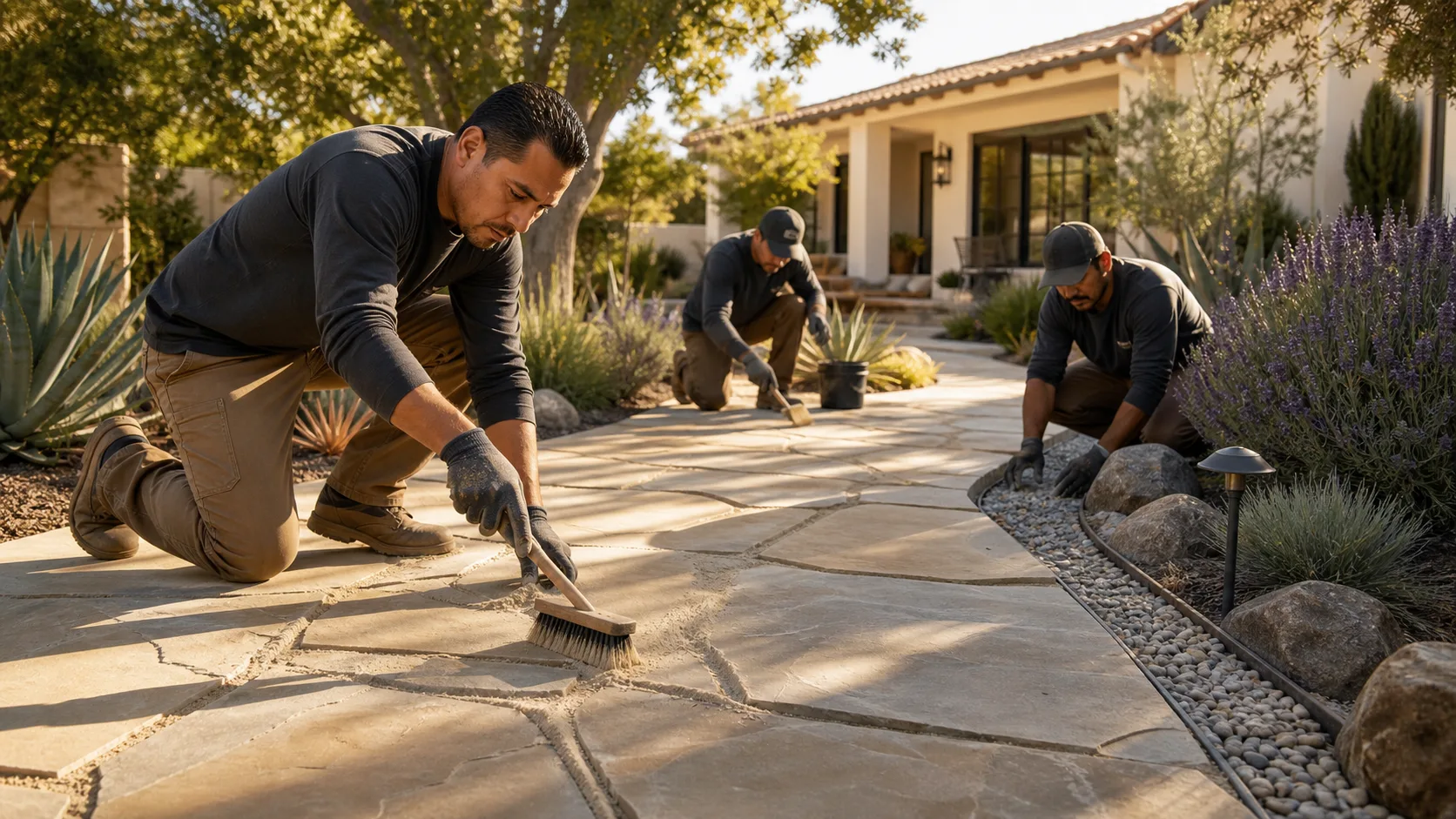
A simple joint refresh usually follows a steady pattern:
- Clean out old, cracked, or loose joint material with a narrow tool and broom.
- Check and lightly re-compact the base around any problem joints so it is firm.
- Spread new sand or fine gravel, sweeping it into joints from several angles.
- Use a plate compactor or hand tamper to help the material settle between pieces.
- For polymeric sand, mist gently with water, in short passes, so it activates without washing out.
In hot weather, gentle, repeated misting usually works better than one heavy soaking.
Dust-Control Strategies for Dry LA Garden Paths
By late summer, many paths in our area are coated with a fine layer of dust. Months of dry air, traffic, and wind slowly grind decomposed granite and fine gravel into powder. Sprinklers and kids playing add to the mix, and that dust often ends up inside the house or stuck to shoes.
Dust is more than just a cleaning headache. When the first real rain hits, dusty paths can turn into slick, muddy surfaces. That means more slipping, tracking, and washouts along the edges.
Some garden path materials naturally handle dust better than others. When people want less dust over time, they often look at:
- Angular, washed gravel instead of ultra-fine mixes that break down quickly
- Stabilized decomposed granite that uses binders to lock particles together
- Tight-joint pavers in main walkways so heavy traffic stays on solid surfaces
- Stepping stone paths with firm joints that keep fines in place
Small upgrades can tame dust without a full rebuild:
- Add a fresh top-dress layer anywhere gravel looks thin or patchy
- Re-level ruts and wheel tracks so water and feet do not grind the same spot
- Use stabilizers made for DG where surfaces keep turning powdery
- Refresh or reset edge restraints so gravel and fines stop spilling into beds
Matching new gravel or DG to older material helps the path look like it has always been that way, instead of a patch job.
Quick Drainage Fixes Before the First Big Storm
Once joints are tight and dust is under control, drainage is the last big piece. A quick water test can show more than months of guessing. On a dry day, use a hose on a gentle flow or a bucket of water and watch what happens.
- Places where water just sits instead of moving off the path
- Spots where water rushes along the edge and carries material away
- Areas where the base seems to wash out, letting pavers or stones sink
Mark these zones with flags, chalk, or small stones so you can come back to them.
Some drainage problems can be eased right at the surface:
- Lift sunken pavers or stones, add compacted base rock, then reset them level
- Shave down high spots so water flows gently off to one side
- Adjust borders or edging so water can drain into planting beds instead of getting trapped
Good base aggregates under your garden path materials make a big difference. When the base is solid and graded with a slight slope, paths are less likely to sink or collect puddles.
For stubborn wet spots, simple drainage upgrades can help:
- Add a narrow gravel swale along one side of the path so water has a place to go
- Install perforated drain pipe under the worst low spots, wrapped in gravel, to carry water away
- Swap out small problem sections for more permeable surfaces, like open-joint pavers or gravel bands, so water can soak in instead of racing across the top
Lock in a Safer, Cleaner Path Before Fall Arrives
Late summer and early fall are the best times to reset your garden paths. When joints are solid, surfaces are less dusty, and drainage is tuned, your walkways are safer, cleaner, and ready for those first fall showers.
Planning one focused path day or a single weekend makes the work feel manageable. With the right garden path materials, tools, and safety gear on hand, both homeowners and pros can take care of loose joints, dusty surfaces, and small drainage problems before they turn into bigger path failures later in the season.
At Mr. Pavers, we work with people across the Los Angeles area to match pavers, sands, gravel, base rock, and drainage materials to the paths they already have and the way they use their outdoor spaces. A bit of smart prep now helps prevent emergency fixes, slippery walks, and avoidable damages when the fall rains finally arrive.
Get Started With Your Project Today
Transform your outdoor space with the right foundation by exploring our curated selection of garden path materials. At Mr. Pavers, we help you choose options that fit your design, budget, and long-term maintenance needs. If you have questions or want guidance before you buy, contact us so we can support you at every step.