Concrete Block Privacy Walls in Los Angeles: Height, Sound, Screening
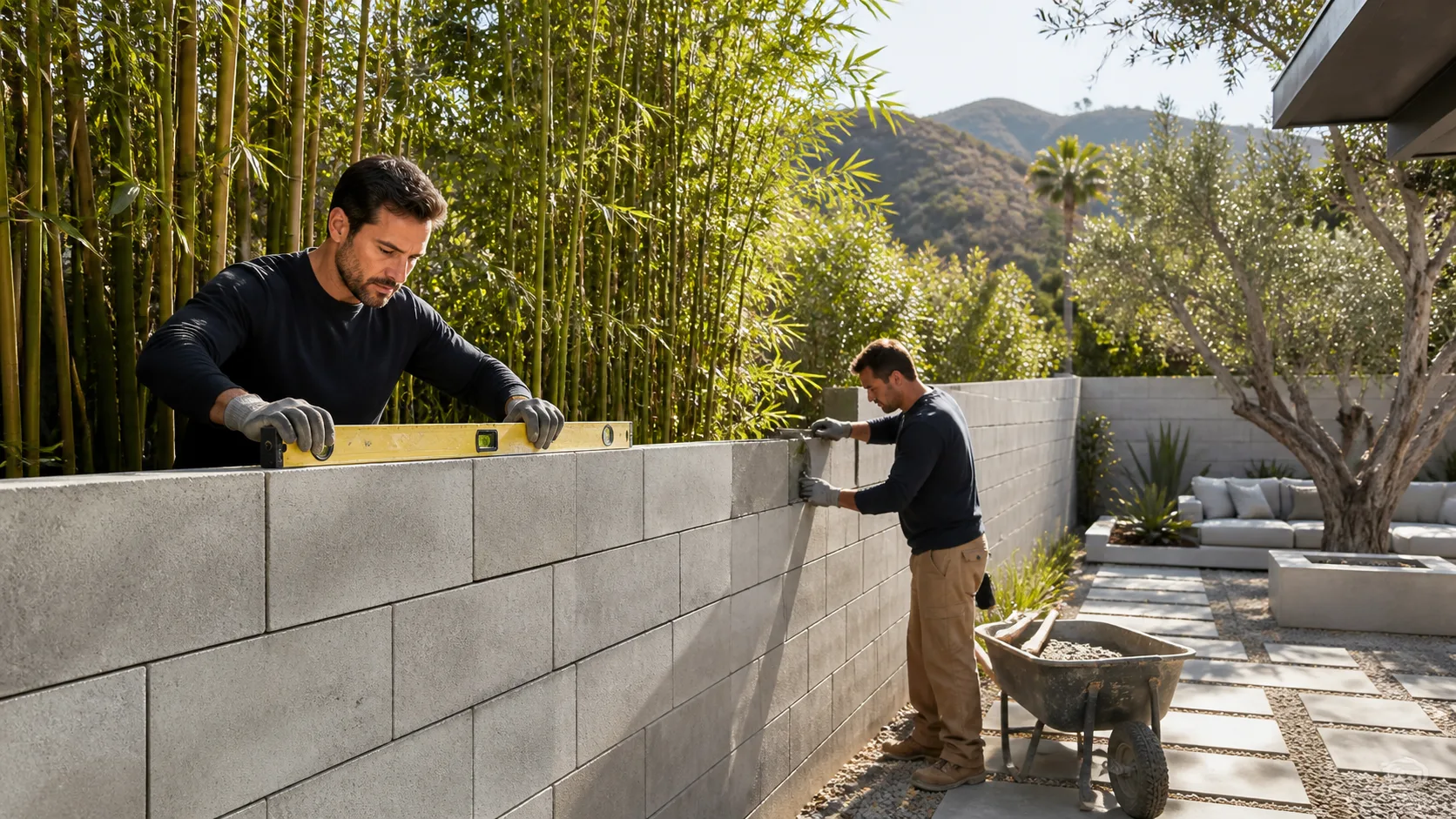
Turn Your LA Yard Into a Private Outdoor Retreat
Concrete block walls can turn a busy Los Angeles yard into a calm, private space. With homes sitting close together and traffic running day and night, many people want better privacy, less noise, and cleaner views. A well-planned wall can help with all three without taking up much room.
In this guide, we will walk through how to design concrete block walls with the right height, layout, and finishes for LA yards. We will talk about common height limits, basic sound ideas, and smart visual screening tricks. We will also touch on why fall is a smart season to plan work and how the right hardscape materials pull your whole yard together.
Understanding LA Height Limits and Local Codes
Before anyone picks out block colors or caps, it helps to think about rules. Around Southern California, there are common patterns for wall and fence heights, but each city can be different.
Typical rules often include things like:
- Lower maximum heights in front yards
- Taller limits along side and rear property lines
- Rules about the total height when a wall sits under a fence
- Extra rules at driveways and street corners so drivers can see clearly
Because of this, it is important to check your own city or county zoning and building rules. Some spots need setbacks from the sidewalk or street. Corner lots may have a required clear triangle so you do not block a driver’s view. Homeowner associations can add their own style and height rules on top of city code. Taller walls or walls on slopes may also need permits or engineering.
A few planning habits make this step smoother:
- Look up zoning maps and fence/wall rules before design
- Take photos and simple notes of current fences, slopes, and drainage
- Mark where property lines are or bring in a survey if lines are unclear
It is also smart to talk with neighbors when a new wall will sit right on or near a shared line. A short chat early on can prevent confusion later. Many homeowners also like working with licensed pros who build in Los Angeles often and understand what local inspectors expect.
Choosing Concrete Block Walls for LA Climate and Style
Concrete block walls are popular in LA for good reasons. They hold up well under strong sun and dry air. They are not bothered by pests, do not rot, and, when designed correctly, can stay stable on the hills and slopes we see across the region.
Concrete block also works well in fire-prone areas, since it is non-combustible and does not catch fire. With proper footing and drainage design from a qualified installer, block walls can manage soil pressure on raised yards and terraces.
Some people think of plain gray block when they hear “concrete wall,” but there are many style options:
- Split-face or textured block for a softer, shadowed look
- Colored block to match roof, trim, or existing hardscape
- Decorative caps that give a finished edge and help shed water
- Pilasters that break up long runs and add rhythm
You can also blend the wall with other materials. Gravel bands at the base keep things tidy. Stone accents, mulch beds, and fresh plantings soften the look. Artificial turf can frame the wall with low-care green that looks good all year.
Fall is a helpful time to plan or build. The sun sits a bit lower, which can be nicer for outdoor work and easier on fresh materials. It is also a smart window before holiday hosting and before heavier seasonal rains, so your new wall can help control erosion around fresh planting areas.
Designing for Privacy, Screening, and Light
When we talk about privacy, it is not just about height, it is about lines of sight. Think about where people can currently see into your space: second-story windows next door, a busy alley, or a patio that faces yours.
A few design ideas can help refine your plan:
- Use full-height block walls where direct views are the worst
- Step the wall height down on less exposed sides to keep the yard from feeling boxed in
- Stagger short wall sections to cover tricky angles
On sloped lots, stepped walls are common. The top of the wall can rise in stages as the ground changes. That keeps the look clean while meeting height rules segment by segment.
To soften the hard surface, you can integrate other screening tools:
- Trellises with vines set just inside the wall line
- Tall planters that raise shrubs or small trees to eye level
- Artificial turf panels or cladding used as accent bands
Light and airflow matter too, especially in LA where yards are used most of the year. In spots where full privacy is not needed, you can introduce decorative patterns, offsets, or spaced elements. Concrete block screens, gaps between pilasters, or short sections with open detail block can keep breezes moving and let in daylight, while solid stretches stay in the areas that need serious screening.
Improving Sound Reduction with Smart Wall Design
Noise from traffic, neighbors, or nearby businesses is a big reason people add concrete block walls. While no wall will give total silence, a good design can take the edge off.
Sound control has a few simple rules:
- More mass helps block more sound
- Taller walls stop more noise than short ones
- A continuous, gap-free wall works better than a leaky one
Instead of focusing only on thickness, think about building a solid barrier with tight joints, proper footing, and no open gaps at the bottom. Heavier blocks can help. In extra noisy spots, pros sometimes add a second face or core-fill parts of the wall so there is more weight between the sound source and your yard.
Layout helps too. Walls that turn back on themselves or create an L or U shape can block sound that would slip around a straight run. Where traffic noise is strongest, aim for as few openings as possible.
Around the wall, soft materials help absorb sound that bounces off hard surfaces. Good options include:
- Dense shrubs or hedges planted near the wall
- Mulch beds that break up hardscape and soak up sound
- Gravel strips instead of large concrete slabs
- Artificial turf areas that act as soft ground cover
By layering a solid wall, smart shapes, and softer materials, you create a buffer zone that feels calmer, even if some background noise remains.
From Yard Vision to Finished Wall with Mr. Pavers
Once you have a rough idea of how you want your yard to look and feel, it helps to put it on paper. A simple sketch of your lot, existing structures, and key views is a strong starting point.
Here are a few planning steps many people find helpful:
- Walk the yard and note where you feel most exposed
- Stand in upstairs windows and look down to see what your neighbors see
- Measure property lines, main dimensions, and any grade changes
- Mark where gates, utilities, and drainage paths need to stay clear
From there, you can list out the types of materials you expect to need: concrete block, caps, footing base, gravel, and surrounding finishes like stone, mulch, or turf. This makes it easier for a professional installer or supply yard to help match materials to your plan.
At Mr. Pavers, we focus on job-ready hardscape materials for both DIY-minded homeowners and trade professionals in the Los Angeles area. Our team can help you think through options for concrete block walls, then pair them with gravel, stone, mulch, and artificial turf so your new privacy wall feels like a natural part of your outdoor retreat. Fall planning gives you time to design with care, bring in the right materials, and enjoy a more private, peaceful yard as the holiday season approaches.
Get Started With Your Project Today
If you are ready to upgrade your property with durable, great-looking concrete block walls, our team at Mr. Pavers is here to help you plan and build it right the first time. We will walk you through design options, timelines, and budgets so you know exactly what to expect. Share a few details about your project and we will follow up with clear next steps, no pressure. To schedule a consultation or request an estimate, simply contact us today.