Seasonal Gravel Garden Design That Keeps Los Angeles Yards Cooler
Cool Your LA Yard with Smart Gravel Garden Design
A late summer afternoon in Los Angeles can make a yard feel like a hot parking lot. Dark roofs, concrete patios, and thirsty grass soak up the sun all day, then throw that heat right back at you when you finally have time to relax outside. No one wants to sit on a patio that feels hotter than the street.
Gravel garden design gives you another option. With the right gravel, stone, and drought-tolerant plants, you can shape outdoor areas that stay cooler, use less water, and still look good through fall. Instead of fighting the Southern California climate, you work with it. That is what we focus on every day at our supply yard.
How Gravel Gardens Help Beat LA Heat
Traditional lawns and solid concrete can hold onto a lot of heat. A smart gravel garden breaks that up so your yard feels more comfortable during late afternoons and early evenings.
Here is how gravel helps in the heat:
- Light-colored gravel can stay cooler than dark rock or blacktop
- Gravel breaks up large hot surfaces, so the yard does not feel like one big heat pad
- The ground under gravel often stays cooler than compacted bare soil
Permeable gravel surfaces also let rain soak in instead of rushing off. That slow soak helps the soil hold more moisture. When the ground is not baked rock hard, it often stays a little cooler, which your plants appreciate in late summer and early fall.
Gravel garden design is also great for water savings. Rock-based beds with drought-tolerant plants need far less irrigation than a standard lawn. As dry spells stretch longer, that lower water use matters. Another bonus: gravel cuts dust and mud, so walkways, kids play paths, and pet routes stay cleaner and more comfortable when friends and family gather outside.
Choosing the Right Gravel and Stone for LA Yards
Not all gravel feels or behaves the same. The type you choose changes how cool, soft, and stable your yard will be.
Common gravel choices include:
- Decomposed granite: fine, packs fairly firm, good for paths and patios
- Pea gravel: small, rounded, comfortable underfoot, shifts more unless contained
- Crushed rock: sharper edges, locks together better, great for driveways and base layers
Size and shape affect drainage and feel. Finer materials like decomposed granite give a smoother walking surface and can be compacted, but they may get dusty without the right base and care. Larger or more angular gravel drains faster and tends to stay put.
Color matters a lot for heat. Lighter tans, soft grays, and buff tones usually absorb less sun than black or very dark rock. That can be the difference between a patio you can walk on barefoot and one you avoid until late at night. Mixing a couple of light tones can create a natural, riverbed look that does not feel flat or harsh.
To finish the space, we often suggest pairing gravel with:
- Larger stones for accents
- Pavers or stone slabs for steady walking paths
- Stepping pads in seating areas
- Solid borders that keep gravel from spreading
With pro-grade gravel and stone, contractors and homeowners can build outdoor areas that look clean, stay cooler, and hold up through season after season of use.
Planting Strategies for Seasonal Gravel Gardens
Gravel on its own can look bare. Plants bring life, shade, and color, and they also help cool the space. A good seasonal gravel garden in Los Angeles layers different plant types so something always looks good.
Think about three key groups:
- Evergreen backbone plants for structure all year
- Late-summer bloomers that carry color into early fall
- Plants with great foliage or seed heads that look interesting into November
Drought-tolerant, heat-loving plants are perfect for gravel beds. Mediterranean herbs, native grasses, succulents, and California-friendly shrubs usually love the sharp drainage and extra warmth around their roots. Many of these plants thrive with less water and still handle sunny days.
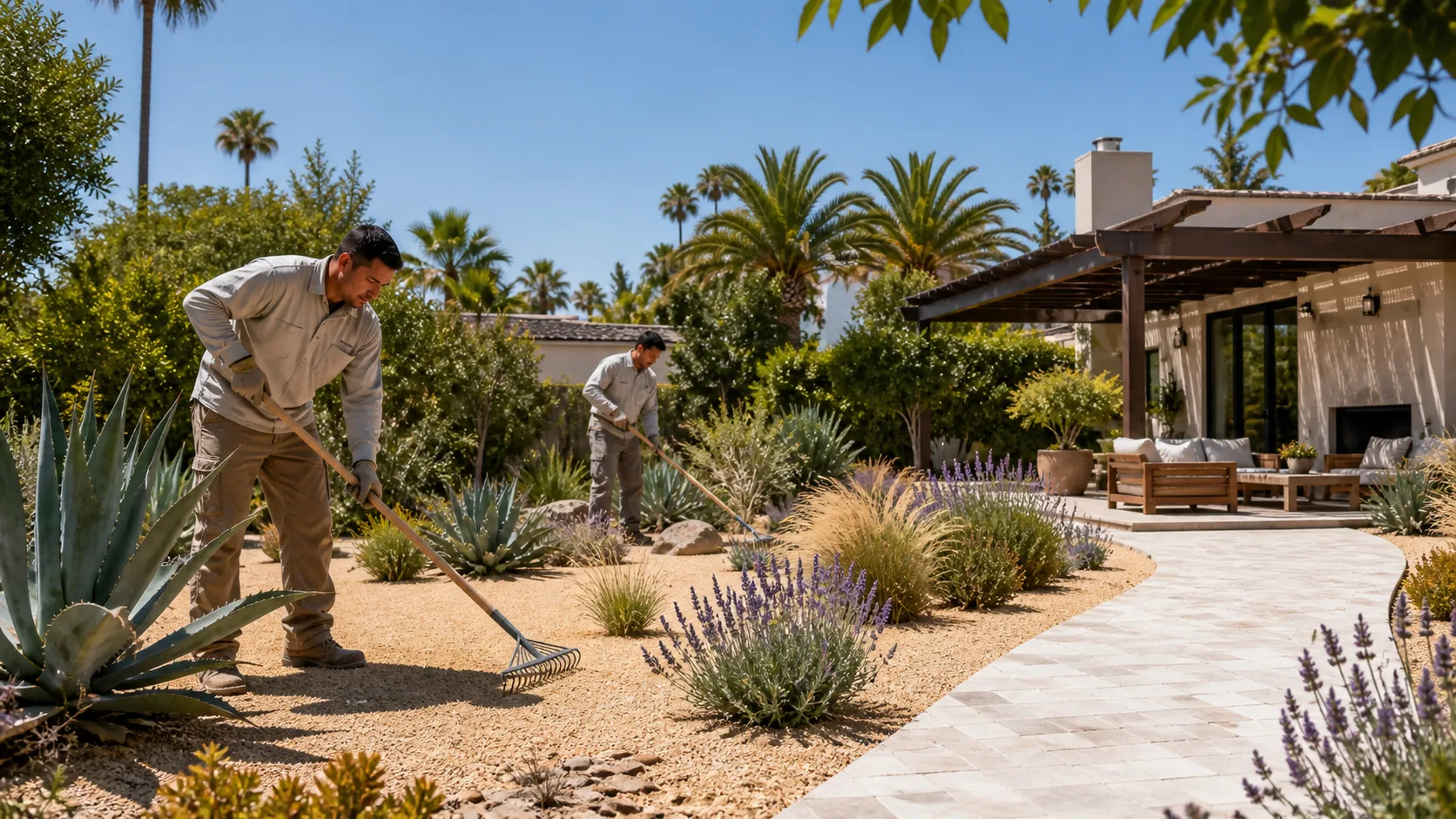
Grouping plants by water needs and sun exposure makes care easier and helps them thrive. Place the thirstiest plants closer to the house or near irrigation lines, and keep tough, low-water plants out in the hottest, driest spots. Around patios, small trees, tall grasses, and shrubs can cast welcome shade and filter light through late-afternoon hours.
To keep soil cooler and roots protected, we like using:
- Mulch in planting pockets to block sun from bare soil
- Decorative rock around trunks to finish the look
- Low, spreading groundcovers that shade the ground and cut weeds
These small touches help your gravel garden ride out late-summer heat waves while still looking tidy.
Designing Cool, Comfortable Outdoor Living Zones
A smart gravel garden is not just random rock and plants. It is a layout that supports how you actually use your yard. Gravel is great for zoning, or breaking one big space into smaller, more comfortable areas.
You can shape:
- A dining zone with a stable base and lighter gravel around the edges
- A cozy fire pit corner ringed with gravel that drains well
- Lounge spaces with stepping pads and soft gravel underfoot
- Defined play spots using turf accents or rounded gravel
Layering materials can help with comfort. Use pavers or larger stone slabs where chairs and tables need to sit flat. Then surround those hard surfaces with lighter-colored gravel that absorbs less heat and lets rain move through during early fall storms.
Shade is another piece of the cooling puzzle. Gravel seating areas pair well with pergolas, shade sails, and carefully placed trees or tall shrubs. A bit of dappled shade over pale gravel can turn a hot, ignored corner into a favorite hangout.
For late-season comfort, many people like to:
- Add plants that stay leafy and cool-looking around patios
- Use softer gravel or turf accents where kids and pets run
- Set low-voltage lighting along gravel paths so they can enjoy cooler evenings outside
These choices keep the space useful from after-school hours through weekend get-togethers.
Seasonal Care Tips to Keep Gravel Gardens Performing
Gravel gardens are low maintenance, not no maintenance. A little seasonal care helps them stay neat, cool, and functional year-round.
A simple late-summer and fall checklist might include:
- Lightly raking gravel to smooth out footprints and tire tracks
- Topping up thin spots that show fabric or bare soil
- Checking edging, borders, and stepping pads for shifts
- Clearing fallen leaves and debris before seasonal winds pick up
Weed control starts under the surface. A good underlayment, the right gravel depth, and smart plant spacing help limit unwanted growth. From there, most people only need occasional touch-ups instead of heavy chemical use.
It also helps to pay attention to water as temperatures and daylight change. Check how quickly water soaks into gravel areas. If you see runoff or hard, compacted spots, you may need fresh gravel or minor grading. Around plants, watch for signs of stress and adjust irrigation timers instead of letting them run on a summer schedule forever.
Refreshing mulch in planting pockets, re-setting stone borders, and squaring up pathways each September keeps your gravel garden looking sharp. With that small effort, it keeps working as a cooler, more comfortable feature in your Los Angeles yard all year.
Get Started With Your Project Today
Transform your outdoor space into a low-maintenance, visually striking retreat with our expert gravel garden design services. At Mr. Pavers, we work closely with you to match the right materials, layout, and style to your property and lifestyle. If you are ready to move forward or have questions about your options, simply contact us and we will help you plan the next steps.