Evaluating Concrete Block Sealants for Hot Los Angeles Yards
Make Concrete Blocks Last in LA Heat
Concrete blocks can take a beating in Los Angeles yards. Strong sun, hot Santa Ana winds, long dry spells, and everyday use all add up. Without protection, blocks in driveways, patios, and garden walls can fade, stain, and start to look tired much faster than they should.
Many homeowners and contractors see the same problems pop up again and again: color that looks washed out, a chalky white film on the surface, stubborn grease or oil spots near the grill, and tiny cracks that slowly spread. These issues are frustrating, but they are not random. They usually come from unsealed or badly sealed concrete.
The good news is that the right concrete block sealants can help keep your yard looking fresh, even through another long Southern California summer. Sealing makes blocks easier to clean, helps protect color, and can slow down wear so you are not redoing work every few years. In hot zones like the Valley or in coastal areas with moisture and salt in the air, sealing is especially smart. Even fall fire season can leave ash and soot on outdoor surfaces, and a good sealer makes that mess easier to rinse away.
How LA Weather Breaks Down Concrete Blocks
Our local weather looks calm at a glance, but it is rough on concrete over time. Concrete is porous. It soaks up water, oil, and dirt, and it reacts to heat and light every single day.
Here is what happens in many Los Angeles yards:
- Intense sun: UV light breaks down pigments in the surface of the block, so colors fade and look dull
- Heat: High temperatures dry out the surface, which can speed up tiny surface cracks
- Temperature swings: Warm days and cooler nights make the concrete expand and contract
All that movement creates tiny gaps where water and dirt can move in and out. Sprinklers, drip lines, and the occasional rain give plenty of moisture. Marine layer in the morning along coastal areas keeps surfaces damp too. That moisture pulls minerals to the surface and dries into a white, powdery film known as efflorescence. Over time, it can lead to flaking and spalling, where thin layers of concrete start to pop off.
Then there are everyday urban stains. Smog and exhaust settle out of the air. Leaves sit on a wall or patio and leave dark tannin marks. Around outdoor kitchens, grease and food spills soak into unsealed concrete and turn into dark, permanent spots. Pet messes and muddy paw prints can also sink in fast. Without a barrier on the surface, it is hard to get that clean, even look back.
Types of Concrete Block Sealants and How They Perform
Concrete block sealants fall into two main groups: penetrating and film-forming. Both can work in LA yards, but they behave very differently.
Penetrating sealers soak into the block. Common types include silane, siloxane, and silicate products. Once they soak in, they react inside the pores of the concrete. This type:
- Keeps more of the natural, matte look
- Usually stays breathable, so moisture can move out more easily
- Often handles heat and UV well, since there is no thick layer on top to peel
Film-forming sealers sit on the surface like a clear coating. Acrylic, polyurethane, and epoxy are examples. These products:
- Can give a low-gloss, satin, or high-gloss wet look
- Often deepen and richen the color of the blocks
- Create a more noticeable layer that can pick up scuffs or peel if moisture is trapped underneath
Appearance matters too. Many people like penetrating sealers for walls, planters, and edging because they do not change the look much. Film-forming products are popular on patios and decorative areas where a richer color or shiny finish is wanted.
Breathability is a big deal in a hot, semi-arid climate. If moisture cannot escape, it can push against that surface layer and cause clouding, bubbles, or peeling. Breathable sealers usually handle real-world conditions better over time. They also affect how often you need to reseal. Some penetrating products last longer between applications, while high-gloss coatings might need more frequent freshening in full sun or high-traffic spots.
Choosing the Right Sealer for Your LA Yard
Picking the right concrete block sealants starts with how and where the blocks are used. Different areas face different kinds of wear.
For example:
- Driveways and parking areas need stain resistance for oil and tire marks and good traction when wet
- Pool decks benefit from breathable, slip-friendly sealers that can deal with constant water and pool chemicals
- Garden walls and raised beds usually need a natural look and good protection from irrigation and soil moisture
- Outdoor kitchens and grill zones need a strong barrier against grease, sauces, and smoke
Sun exposure is another key factor. In LA, south-facing and west-facing surfaces bake in the afternoon. Darker blocks can get very hot and may fade faster. In those zones, stronger UV resistance and products made for high temperatures are worth it. Light-colored blocks still need help too, but the focus may be more on stain resistance and easy cleaning.
Budget and lifespan play a part, but it is not only about the product label. Local conditions matter a lot. Dust from nearby streets, overspray from sprinklers, ash from seasonal fires, and frequent hosting in the yard all add up. A sealer that looks great on the first day but needs constant touch-ups is not a win. It is better to match the sealer to how you actually use your space, so you get solid performance over the long run.
Step-by-Step Prep and Application for Hot-Weather Sealing
Choosing the right time to seal concrete blocks helps your results. In Los Angeles, early fall is often a smart window. Days are still warm, but the sun is not quite as intense and evenings cool down a bit. Aim for:
- Dry weather
- Mild temperatures, not the peak of the afternoon
- Shaded or indirect sun conditions while you work
Good prep matters even more than the product choice. Before sealing, blocks should be:
- Swept and cleared of loose dirt and leaves
- Washed to remove surface dust and grime
- Treated with appropriate cleaners for oil, rust, or tannin stains
- Checked for efflorescence and cleaned so the powdery film is gone
- Repaired where there are cracks, loose caps, or missing joints
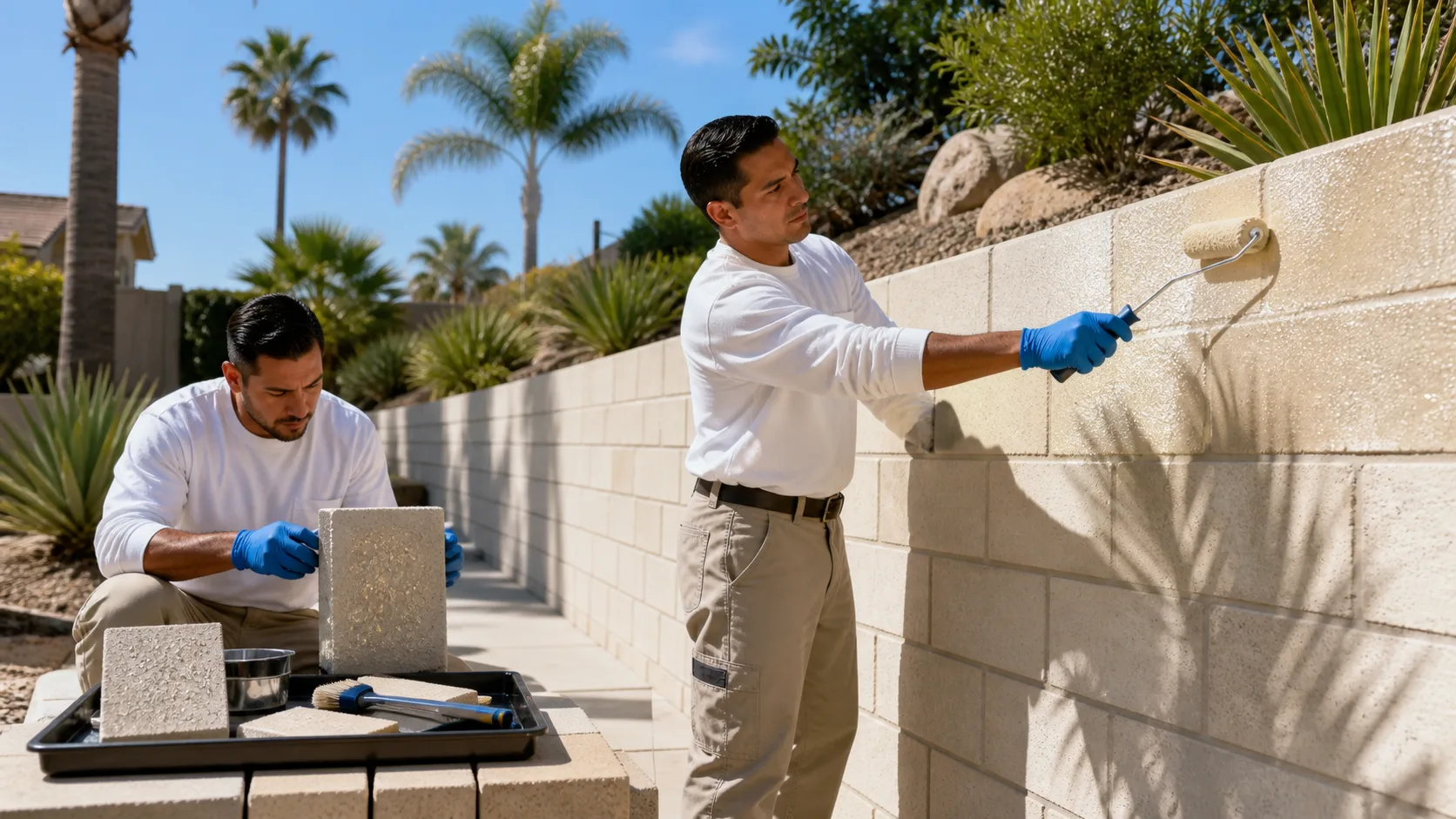
Only after the surface is clean and dry should sealant go on. Application methods can include roller, brush, or sprayer, depending on the product and the area. Most sealers call for even, thin coats instead of one heavy coat. It is common to apply one coat, allow the proper drying time, then apply a second if recommended.
Curing time before use is just as important. The surface may feel dry to the touch but still need more time before it is ready for cars, heavy furniture, or constant foot traffic. Following the product instructions for drying and curing helps avoid tracks, marks, or early damage.
Keep Your LA Hardscape Looking New Year After Year
Once concrete block sealants are in place, a simple routine keeps your yard looking sharp. A quick seasonal checklist can help:
- Gently rinse or wash blocks to remove dust and debris
- Use mild cleaners for small stains before they set in
- Check high-traffic and full-sun zones for dull spots or worn paths
- Clear leaves and organic matter so they do not sit damp on the surface
Over time, you will start to notice signs that it may be time to reseal. Water may stop beading up on the surface. Areas that once looked rich and even may start to dull faster. New stains might seem harder to remove. These are hints that the protective layer is wearing thin.
Sometimes it also makes sense to upgrade to a different type of sealer. For example, an area that was once mainly decorative might now be a busy outdoor kitchen, or a new irrigation setup may bring more moisture to a wall or planter. Matching the sealer to how the space is used today helps keep your concrete blocks in good shape, even as your yard changes around them.
Get Started With Your Project Today
Protect and enhance your hardscape by choosing Mr. Pavers for high-quality concrete block sealants tailored to your specific project. We take the time to understand your surfaces, weather conditions, and long-term goals so your investment looks better and lasts longer. If you are ready to discuss your options, contact us and we will help you plan the right sealing solution for your property.