Heat-Resistant Jointing and Edge Restraints for Los Angeles Paver Paths
Beat the LA Heat with Stable, Beautiful Garden Paths
Garden paths in Los Angeles have a tough job. The sun bakes them all day, Santa Ana winds blow dust into every gap, and drought-tolerant yards often have dry, shifting soil. On top of that, many paths sit right next to drip lines and planters, so they get hit with water on and off.
Even strong pavers can start to fail early if the joints and edges are not done right. You might see gaps, loose pieces, or chipping on the corners. That is usually not a paver problem. It is a jointing and edge restraint problem.
We want to walk you through heat-resistant garden path materials, smarter jointing products, and solid edge restraints that work for LA conditions. When you get these details right, your path stays flat, safe, and good-looking for years, even in full sun.
Why LA Garden Paths Fail in Heat and Dry Spells
On a hot day, paver surfaces can get very warm. Concrete, stone, and porcelain all expand when heated, then shrink again at night. Over time, this constant movement stresses every part of the system, from the base to the edge restraints.
Here is what often goes wrong:
- Heaving: Pavers push up or tilt so the surface is no longer flat
- Spalling: Small chips or flakes break off the top or corners of the paver
- Edge creep: The outer row slowly moves out, making wider joints and trip spots
Common causes include:
- A base that was not compacted enough
- Soft spots in clay-heavy or decomposed granite soil
- Cheap joint sand that washes out or blows away
- Missing or weak edge restraints that let things shift
Los Angeles has many yards with clay-heavy soil. When it gets wet from irrigation or a sudden downpour after a dry spell, clay can swell and then shrink again as it dries. Decomposed granite areas can erode or rut if water runs along a path edge.
That is why the details under and around your garden path matter more here than in cooler, more gentle climates. The sun, soil, and on-and-off watering all work together, and they will quickly show any weak spots.
Choosing Heat-Resistant Garden Path Materials and Jointing
The pavers you pick are your first line of defense. Different materials handle LA heat in different ways.
Here is a basic overview:
- Concrete pavers: Popular and strong, can warm up in full sun, good if paired with the right jointing and base
- Porcelain pavers: Dense and hard, resist staining and spalling, stay flatter over time with proper support
- Natural stone: Beautiful and unique, some stones stay cooler and handle heat well, others may chip if they are too soft
Surface texture matters too. Smoother finishes can feel slick when wet from irrigation or a quick rinse, while textured faces offer better grip under sandals or bare feet.
Next comes the jointing material, which fills the gaps and keeps everything locked together:
- Standard joint sand: Cheap and simple, but can wash out in heavy watering or blow out in wind, often leads to weeds and ants
- Polymeric sand: Sand mixed with special binders that harden when activated with water, helps lock pavers together and resists washout
- Resin-based jointing products: Usually used on special projects, very strong, often overkill for typical garden paths
For most LA garden paths, polymeric sand is a smart choice because it:
- Holds up better under strong sun and high surface temperatures
- Resists light hose spray, drip line splash, and small runoff
- Cuts down on weed growth in the joints
- Makes it harder for ants to tunnel through
- Reduces joint washout on gentle slopes
Correct installation is key. The base needs to be well compacted, the joints filled all the way, and the surface cleaned before the sand is lightly watered and left to cure. When that is done right, the whole path acts like one solid surface instead of hundreds of loose pieces.
Edge Restraints That Stop Creep, Gaps, and Trip Hazards
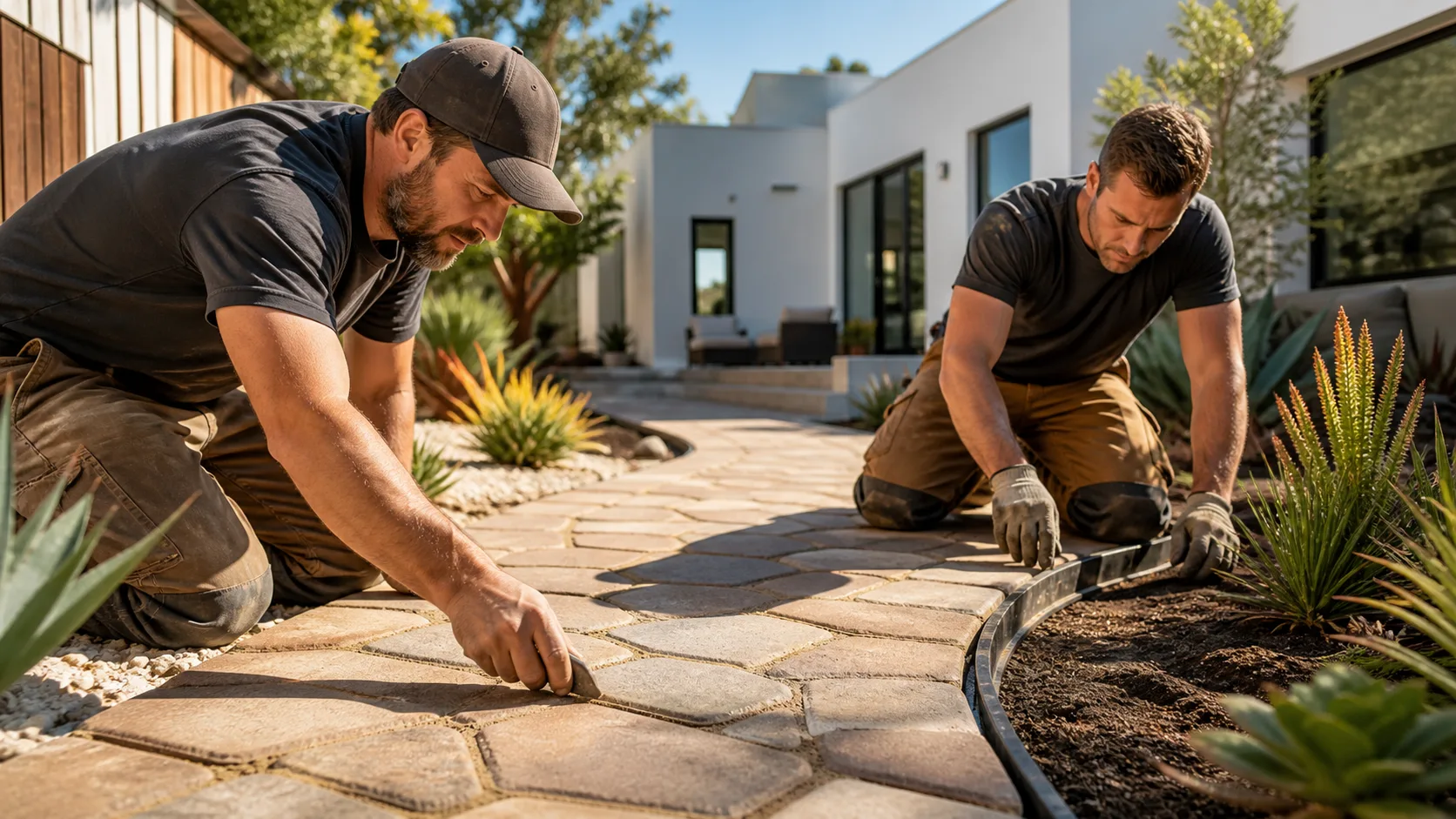
Edge restraints are the quiet heroes of any garden path. They are what stop the pavers from slowly pushing outward as people walk, soils swell, or wheelbarrows roll by.
Without solid edges, you may see:
- Wider joints at the outer rows
- Pavers tilting away from the main field
- Trip hazards where the path meets turf or gravel
Common edge restraint options include:
- Concrete curbs: Strong and long-lasting, good for main walkways and drive areas
- Aluminum or steel edging: Slim profile, clean look, very stable, good along straight or gently curved paths
- Heavy-duty plastic paver edging: Flexible and DIY-friendly, works well if anchored into a compacted base
No matter which style you pick, the basics stay the same:
- Set the edging on or just into the compacted base, not soft soil
- Use stakes at the spacing recommended for the product, closer on curves
- Bury the edging low enough that it is hidden by pavers, turf, or gravel
- Tie edges into nearby features like artificial turf, gravel beds, or planter borders so everything supports everything else
When edges are tight and solid, jointing stays in place and pavers move as a group instead of drifting apart.
Seasonal Strategies for Fall and Winter Garden Path Projects
Fall in Los Angeles is a great time to upgrade or repair garden paths. The sun is still strong, but workdays are a bit easier and paths are not baking as long.
Planning your steps helps fresh jointing and edges settle in before heavier use during holiday gatherings and outdoor parties.
A simple project rhythm could look like this:
- Grade and compact the base on dry days
- Install pavers and edge restraints once the base is stable
- Sweep in polymeric sand on a clear day with no rain in the forecast
- Lightly water the joints and let them cure with low foot traffic
As you move into the cooler season, a little basic care helps your path last longer:
- Walk your path and check for any movement at the edges
- Top up low joints before they turn into bigger gaps
- Gently rinse dust and leaves so they do not trap moisture against the surface
- Keep nearby irrigation aimed so it does not pound directly into joints or edges
These small checks protect your investment and keep the path ready for daily use.
Build a Heat-Proof Path with Job-Ready Materials From Mr. Pavers
Stable, comfortable garden paths start with the right garden path materials, but they only stay that way when jointing and edge restraints match LA conditions. Strong pavers, heat-tough polymeric sands, and solid edging all work together to fight heaving, spalling, and loose pieces.
At Mr. Pavers, we focus on in-stock, job-ready hardscape materials that local builders and landscapers rely on. We supply pavers, stone, gravel, turf-related products, polymeric sands, and edge restraints that fit the way Los Angeles yards actually behave in heat, dry spells, and sudden rain.
When you are planning your next path, it helps to talk through your soil, slope, and sun exposure with someone who knows the area. That way every layer, from the base up to the edges, is ready for the LA sun.
Get Started With Your Project Today
Transform your outdoor space with the right foundation by exploring our curated selection of garden path materials. At Mr. Pavers, we help you choose options that match your style, budget, and long-term maintenance needs. If you have questions or want guidance before you buy, simply contact us and we will walk you through your best choices.