Concrete Deck Blocks vs. Poured Footings in Los Angeles: When to Use Each
Build Safer Outdoor Spaces with the Right Foundation
Choosing how to support a new deck or pergola is one of the first big calls you have to make. For many Los Angeles homeowners, the choice comes down to concrete deck blocks or poured footings. Both can hold up a small structure, but they do it in very different ways.
This decision affects safety, how long your project lasts, what kind of permit you might need, and how much time you spend building. Our goal here is to give you clear, simple guidance so you can match the foundation style to your project, budget, and property in Los Angeles. As a local hardscape supply yard, we work with pavers, gravel, stone, turf, and other materials every day, so we see what works well in real backyards across the area.
What Concrete Deck Blocks Really Are
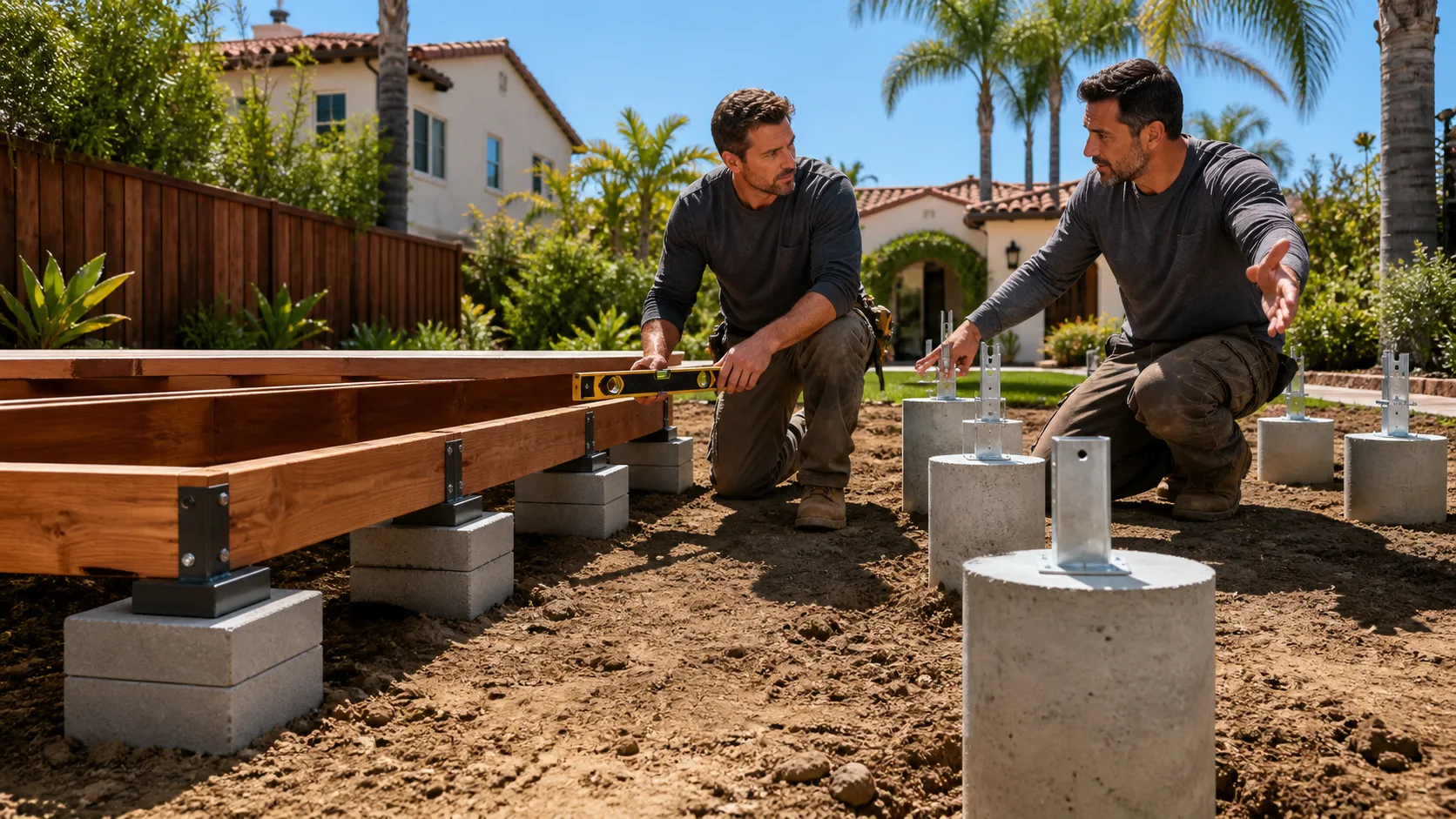
Concrete deck blocks are pre-cast concrete supports that sit on top of the ground. They usually have a slot or pocket on top where a post or beam can rest. Think of them as chunky concrete “feet” for low, light structures.
They tend to work best for things like:
- Low, ground-hugging platform decks
- Simple floating decks that are not attached to the house
- Light pergolas with open tops or shade cloth
- Short-term or “move later” outdoor setups
DIYers often like concrete deck blocks because:
- There is no building of forms or mixing concrete in holes
- You usually dig only shallow spots or scrape the surface
- You can slide blocks a bit to adjust layout before framing
- The overall process feels faster and less stressful
There are tradeoffs. Concrete deck blocks are not a good match for tall decks, heavy roofs, or big spans. On steeper or very uneven parts of Los Angeles, where soil can shift or be quite loose, blocks can be harder to level and keep that way. They are generally better for small, simple, low projects on fairly calm ground.
When Concrete Deck Blocks Make Sense in Los Angeles
Los Angeles has many backyards that are already close to grade, with patios, side yards, or strips of ground beside the house. In these flatter spots, concrete deck blocks can be a smart option for a quick upgrade.
They tend to make sense when:
- The deck or pergola is low to the ground
- The structure is freestanding, not tied into your home
- The soil is stable and not at the edge of a steep slope
- You want something that could be changed or removed later
Lifestyle also plays a part. Many homeowners want a weekend-friendly project that is ready for fall gatherings, game days, or holiday parties. If you want to avoid deep digging in a tight city lot, concrete deck blocks can help keep the work surface-level and simpler.
Los Angeles does not deal with deep ground freezing, so full frost-depth footings are usually not the main concern. Still, local building code, HOA rules, and permit offices may have clear limits for when on-grade blocks can be used. Any time you are raising people up off the ground, supporting a roof, or getting close to property lines, it is smart to understand those rules before you start.
Concrete deck blocks also pair well with other surfaces. Many people combine them with:
- Paver patios and walkways around a low deck
- Gravel areas under a pergola for drainage
- Artificial turf strips between pavers for a softer feel
By thinking about the whole outdoor zone, you can tie the deck or pergola into the rest of your yard so it feels planned and pulled together.
Why Poured Footings Are Still the Gold Standard
Poured footings are a more traditional way to support decks and pergolas. With this method, holes are dug below the loose topsoil, then filled with concrete. Hardware is set into the wet mix or attached after it cures so posts are locked to the footing.
Poured footings are usually the better choice when:
- The deck is more than a small step above grade
- The pergola uses heavier lumber or has a solid roof
- The structure is attached to your house
- You are building on a slope or near a hillside
They offer strong safety and long-term benefits, including:
- Deeper support in the soil to handle weight and movement
- Better performance on sloped Los Angeles lots
- Improved resistance to wind and small soil shifts
- A design that often lines up better with building department expectations
Poured footings take more setup, tools, and patience than dropping concrete deck blocks on the ground. However, for many homeowners, especially with bigger or higher projects, that extra effort can pay off with a sturdier feel and fewer worries over time.
Cost, Time, and DIY Skill: Honest Tradeoffs
When people compare concrete deck blocks and poured footings, they are really weighing time, effort, and comfort with building tasks.
Concrete deck blocks usually mean:
- Less labor with digging and soil hauling
- No need for forms, rebar, or mixing concrete on-site
- Easier layout changes early in the project
Poured footings usually mean:
- More physical work digging deeper holes
- Planning for concrete delivery or mixing by hand
- More exact measurements so posts line up correctly
Concrete deck blocks can feel more forgiving for beginners because you can adjust placement before framing. Poured footings ask for more precise layout, careful measuring, and comfort working with wet concrete and hardware placement. Many homeowners choose to get guidance on layout and materials so they feel more confident before starting, especially when schedules are tight around the holiday hosting season.
Pairing concrete deck blocks with job-ready hardscape supplies, like base gravel and pavers, can also help keep timelines clear. With the right materials on hand, the focus shifts to assembly, not last-minute runs for missing pieces.
Site Conditions, Permits, and Local Rules
Your yard itself often decides which foundation style makes the most sense. Key site factors include:
- Slope and how quickly the ground drops off
- Soil type, whether it is hard, sandy, or loose fill
- Drainage paths and where water tends to flow or sit
- Distance from property lines, fences, and nearby structures
Los Angeles has many hillside areas, high-fire-risk zones, and spots where earthquakes are a concern. In some locations, that can lead to stricter rules about posts, footings, and attachments. A simple pergola on a flat backyard pad may be treated very differently than a raised deck that looks over a steep slope.
Common triggers for permits can include:
- Deck height above the ground
- Whether the deck is attached to your home
- Overall square footage
- Whether the pergola will support a solid roof or heavy shade system
Once you have a sense of your layout, height, and site conditions, it becomes easier to see if concrete deck blocks are realistic or if poured footings are the safer match. That choice helps guide which hardscape materials will work best with the rest of your outdoor plan.
Plan Your Next DIY Deck or Pergola with Confidence
A simple way to think about the choice is this: use concrete deck blocks for low, freestanding, lighter structures on stable, mostly level ground. Choose poured footings for taller, heavier, sloped, or attached designs where stability matters more and code rules are tighter.
As you map out your fall project, it helps to sketch your space, measure your yard, and take a few photos from different angles. That makes conversations about footing styles, deck blocks, pavers, gravel, stone, turf, and other materials much easier and clearer. At Mr. Pavers, we are ready to look at your ideas and help match them with job-ready materials that fit your site and your plans for year-round outdoor living.
Get Started With Your Project Today
Upgrade your outdoor space with durable, easy-to-install concrete deck blocks designed to support your project from the ground up. At Mr. Pavers, we will help you choose the right materials so your deck, shed, or patio is built to last. If you have questions or need personalized guidance, contact us and we will walk you through every step.