Which Gravel Garden Design Works Best Around Los Angeles Pools?
Create a Cool, Low-Maintenance Oasis Around Your Pool
A gravel garden design around your pool can turn a simple backyard into a relaxed, resort-style space that actually fits Los Angeles life. Long swim seasons, hot sun, and busy schedules all push us to look for outdoor setups that look sharp without a lot of fuss.
Gravel breaks up big stretches of concrete, softens hard edges, and keeps water splashes from turning into muddy messes. It also avoids the constant trimming, watering, and cleanup that come with lawns or delicate plants right next to the water. With the right plan, your pool area can feel cooler, calmer, and easier to keep clean.
In this article, we will walk through what works best around LA pools: smart gravel choices, simple layout ideas, safety and drainage basics, and plant options that stay good-looking through hot days and mild nights. We will also touch on how to tie your gravel garden into pavers, stone, and other hardscape pieces for a clean, finished look.
Why Gravel Gardens Work so Well Around LA Pools
Los Angeles has a dry, sunny, Mediterranean-style climate for most of the year, and that is exactly where gravel gardens shine. Gravel does not dry out, wilt, or fade like lawn or thirsty groundcover, so it holds up through fall heat and long stretches of strong sun.
Gravel gardens help pool owners in a lot of practical ways:
- Much less watering than turf
- No muddy spots at the pool edge
- Fewer weeds and random plants popping up
- No grass clippings in the pool
Gravel also creates clean breaks between your pool coping, pavers, and planting areas. It blends easily with:
- Concrete pool decks
- Stone or concrete pavers
- Raised planters and walls
- Artificial turf zones
Because gravel is flexible, you can shape it to fit any pool layout, from straight and modern to soft and curved. That makes it a great base layer for paths, seating areas, and accent strips that all flow together.
Choosing the Right Gravel for Poolside Comfort and Safety
For pool areas, comfort under bare feet is a big deal. Not all rock feels the same, so the type and size you pick matter.
Here are common choices and how they feel:
- Pea gravel: Small, rounded stones that are gentle underfoot, good for light-use paths and lounge zones
- Decomposed granite (DG): Fine, compacted material that creates a firm surface, often used for paths and seating areas
- Small decorative rock: Slightly larger pieces than pea gravel, can still feel fine to walk on if the edges are not sharp
Safety is just as important as comfort. Properly installed gravel or DG can improve traction when you step out of the pool. A few key points:
- Avoid sharp, jagged rock that can hurt bare feet
- Skip very large stones that roll or shift under weight
- Compact base layers so the surface feels stable, not squishy
Color matters too. Around LA pools, lighter gravel shades are often a smart pick. Light tan, soft gray, and cream blends tend to:
- Stay a bit cooler in direct sun
- Cut down the harsh glare that dark stone can create
- Set the mood, like warm Mediterranean or calm, modern gray
Quality and consistency make a big difference. Clean, washed gravel and DG with even sizing are less dusty, less messy, and less likely to track into the pool or house.
Smart Gravel Garden Design Ideas for Poolside Style
You do not need a complex plan to get a great look. A few simple gravel design moves can make your pool area feel pulled together.
To frame the pool, many people use:
- A slim band of gravel between coping and planting beds
- A gravel strip between pavers and walls for a soft transition
- Matching gravel in small pockets around corners and steps
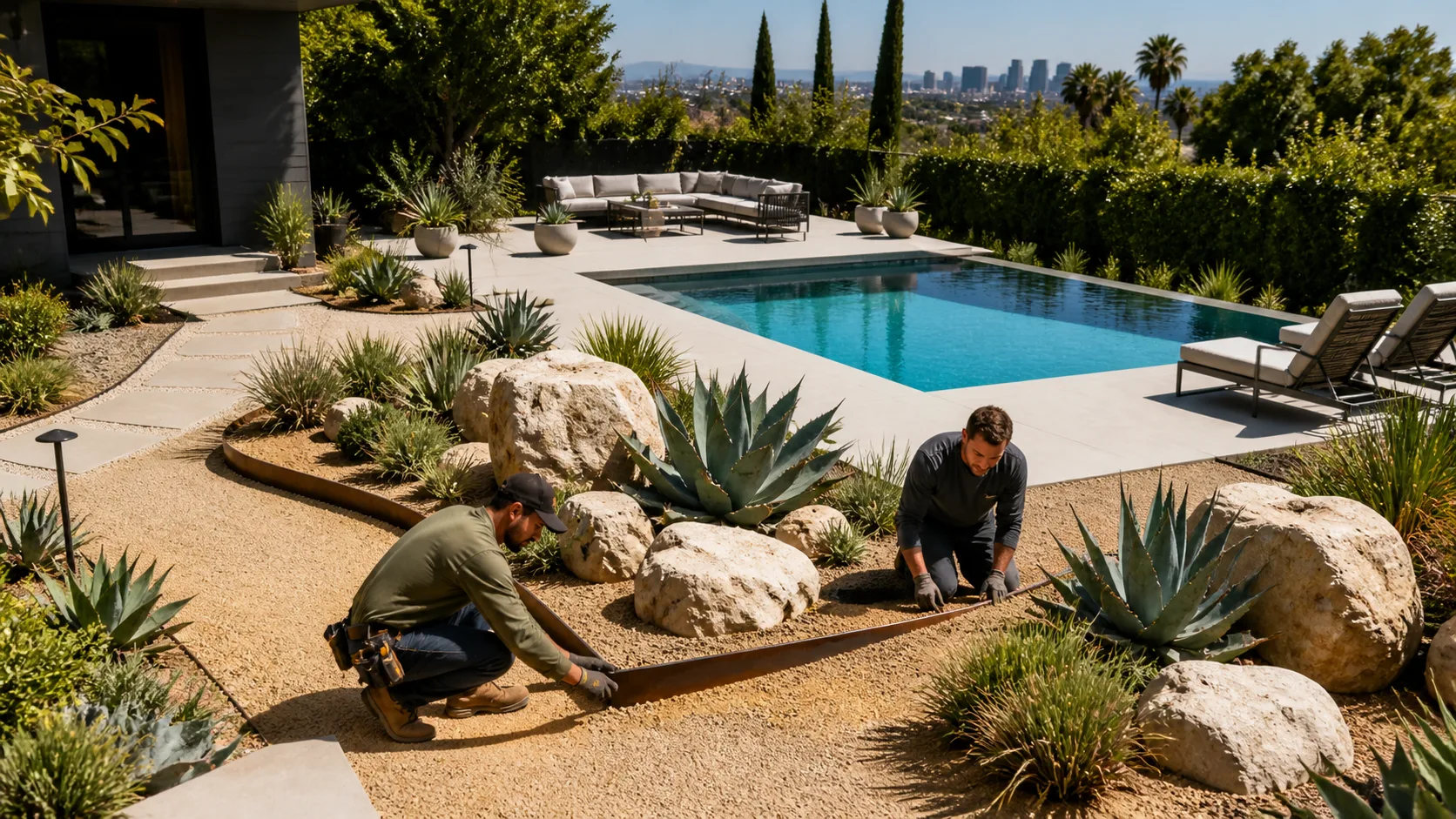
Clear edges keep everything neat. Steel, stone, or concrete edging creates sharp lines so gravel stays where you want it and the whole space looks finished.
Gravel is also perfect for defining zones:
- Lounge areas with chairs and umbrellas
- A small fire pit corner near the pool
- Walkways from the house, side yard, or outdoor shower
To bring in more texture and interest, pair gravel with larger pieces:
- Big concrete or stone pavers set in gravel
- Natural stone slabs for stepping paths
- Accent boulders or low walls
As fall events and holiday gatherings approach, you can shift your poolside setup without redoing the hardscape. It is easy to add:
- Planters with fresh seasonal color
- Freestanding fire features
- Outdoor heaters or lanterns on stable gravel pads
Plants That Thrive in LA Gravel Gardens Around Pools
Plants and gravel can work together beautifully around a pool if you choose the right types. Near the water, it helps to keep plant litter as low as possible so filters and skimmers do not get overloaded.
Good pool-adjacent plant traits include:
- Low leaf and flower drop
- Non-invasive roots that will not push into plumbing
- Tolerance for a bit of chlorine or salt overspray
- Compact, tidy growth
Drought-tough plants that like well-drained, gravelly soil are a strong match for LA conditions, such as:
- Mediterranean herbs like lavender and rosemary
- Certain ornamental grasses that stay upright and neat
- Succulents and small agaves in non-traffic zones
- California-friendly natives that like dry feet
Because gravel and pool water both reflect light, the area can feel extra bright. Plants that handle strong sun and still look fresh through warm fall days work best. Pick varieties that keep their shape and color even as nights get cooler.
A simple planting strategy:
- Use edging to carve out pockets or raised beds in your gravel areas
- Lay landscape fabric in non-planted gravel zones to slow weeds
- Keep plants grouped so they are easy to water and trim
This way, your gravel stays mostly clean and open, and your plants look intentional instead of random.
Build It Right With Solid Base, Drainage, and Edging
A good gravel garden design around a pool always starts from the ground up. If the base and drainage are right, the space will stay level and low-maintenance longer.
Key prep steps usually include:
- Removing grass or old planting soil where gravel will go
- Leveling the area and shaping a gentle slope away from the pool edge
- Installing and compacting a stable base layer, such as road base or DG, under your gravel
Proper grading around the pool helps water flow away from the coping and foundation. This keeps water from pooling in corners or along walls after splashy swim sessions and reduces slippery spots.
To keep gravel from moving around, edging is important. Common options include:
- Concrete curbing that matches or complements the deck
- Paver borders that tie into existing patios or walkways
- Steel or composite edging with a subtle, clean look
Some homeowners are comfortable handling small gravel areas themselves, like a narrow border or a small seating nook. For larger pool surrounds, complex grading, or detailed plant and paver layouts, many people prefer to bring in a contractor who knows how to shape water flow and create strong, long-lasting bases.
With the right materials, a clear layout, and solid prep, a gravel garden design can turn your LA pool area into a clean, modern, and low-maintenance hangout that fits how you actually use your yard.
Get Started With Your Project Today
Transform your outdoor space into a low-maintenance, visually striking retreat with our custom gravel garden design solutions. At Mr. Pavers, we work closely with you to plan every element so your garden looks great and functions beautifully year-round. If you are ready to explore ideas or schedule a consultation, simply contact us and we will guide you through the next steps.