Concrete Block Garden Walls in Los Angeles Heat: Footings and Drainage
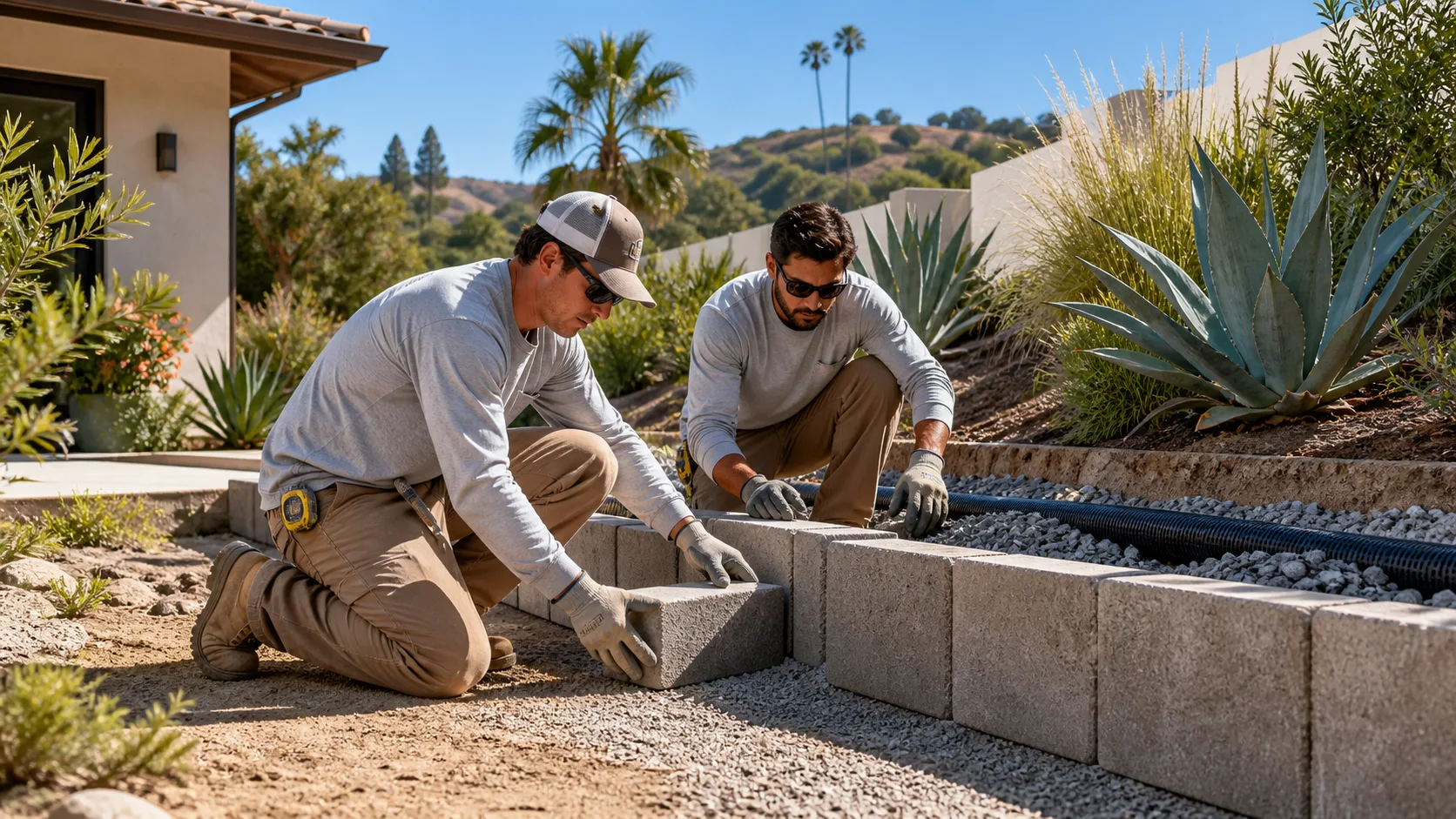
Concrete block walls can look strong on day one, then start to crack, lean, or bulge after a few hot Los Angeles summers. Most of the time, the problem is not the block itself. It is shallow footings, light or missing steel, and poor drainage that cannot handle dry spells followed by heavy rain or heavy watering. When the base and support are weak, heat and soil movement do the rest.
We work with contractors and homeowners across the LA area, and we see the same patterns. Even a short planter or garden seat wall needs real planning. Soil type, slope, irrigation, and sun exposure all change how a wall behaves over time. Here we will walk through practical footing, reinforcement, and drainage details you can actually build, using common materials from local supply yards. Fall is a great planning and building season, with long days and plenty of time to set walls before winter rains arrive.
Start with the Soil and Layout Before You Stack a Block
Good concrete block walls start long before the first block is set. The first step is to look at the site and decide what the wall really needs to do.
Ask yourself a few key questions:
- How tall will the wall be at its highest point?
- Is it holding back soil, building a raised planter, or just creating a seat or edge?
- Is it near a house, fence, pool, or driveway?
- Does water naturally flow toward this area during storms or heavy watering?
Height and purpose matter. Low non-retaining walls may follow simple guidelines, but once you hold back soil or get into taller walls, local codes and sometimes an engineer should be part of the plan.
Soil in the Los Angeles area can be tricky. You can run into:
- Expansive clay that dries, shrinks, then swells when wet
- Fill dirt from old grading work that is loose and uneven
- Slopes and hillsides that can creep or slide slowly over time
A few basic checks can help: dig a small test hole with a shovel, look for layers of loose fill versus firm native soil, and notice if water tends to pool after irrigation. If the soil feels very soft, spongy, or cracked when dry, or if the wall will sit on a slope, that is a sign to aim for stronger footings and possibly get professional guidance.
For layout, take time with string lines, stakes, and marking paint. Pull strings where you want the face of the wall, then step back and see how it lines up with patios, walkways, and planting beds. Curves, corners, and steps should feel natural, not like the wall was squeezed in later. A simple sketch with dimensions helps you spot awkward angles before any digging starts.
Designing Footings That Survive LA Heat and Dry Spells
The footing is the unseen work that makes concrete block walls last. Its job is to spread the weight, resist settlement, and help the wall ride out small soil shifts from dry to wet conditions.
For many short garden walls, a compacted gravel footing can work. Taller walls or anything truly retaining soil often need a reinforced concrete footing with steel that ties into the wall. The bigger the wall and the more soil it holds back, the more important that concrete footing becomes.
General footing ideas to keep in mind:
- Excavate below loose topsoil and organic material to firm subgrade
- Make the trench wider than the block, not just the exact block width
- Keep the bottom flat and level along the whole run
The deeper you go into good, stable soil, the less likely your wall is to settle unevenly. Local building departments can give minimum depths for different wall heights, so it is smart to confirm when you are close to those limits.
For gravel bases, use angular road base or Class II aggregate, not round pea gravel. Place it in thin layers and compact each lift with a plate compactor. In our hot, dry fall weather, a light mist of water on the base before compacting can help it knit together better. The goal is a dense, solid pad with a perfectly level surface for the first row of block.
Reinforcing Concrete Block Walls for Strength and Safety
Reinforcement turns a loose stack of concrete block into a much stronger structure. Without steel and grout, a wall depends mostly on gravity. With it, the wall can act like a single unit, which is far better in heat, small seismic events, and on slopes.
Basic reinforcement pieces include:
- Vertical rebar dowels tied into the footing and running up through block cores
- Horizontal steel in bond beams that lock sections together
- Grouted cells where block cores are filled with concrete grout around the steel
Short, non-retaining garden walls sometimes use only gravity and careful base work. But as soon as you hold back soil or add height, vertical rebar at regular spacing tied to a concrete footing becomes very important. Some walls also use bond beam blocks or cut channels in a course of block to place horizontal steel that helps control cracking over long runs.
In Los Angeles, walls see wide swings between hot days and cooler nights. Concrete and block expand and contract a bit with temperature. On top of that, we live with periodic seismic movement and surface soils that dry and shrink. A reinforced pattern allows the wall to flex slightly and spread stress so you get small hairline cracks at planned locations instead of big, ugly fractures or leaning sections.
Drainage and Backfill Details That Prevent Wall Failure
Water is the quiet enemy of many concrete block walls. Even though our climate is usually dry, winter storms, broken sprinklers, or heavy watering can soak the soil behind a wall. Wet soil pushes harder, raises pressure, and can stain and weaken the block over time.
A solid drainage setup should include:
- Free-draining gravel backfill right behind the wall
- A perforated drain pipe at the base, sloped to daylight or a drain point
- Filter fabric between gravel and native soil
- Weep holes where allowed and appropriate, to let water exit near the base
Each piece does part of the job. Gravel gives water an easy path down, the pipe collects and carries it away, and the fabric keeps fine soil from clogging the system. Without this combo, trapped water can build up, especially behind planters and raised beds.
When backfilling, go in shallow lifts, compacting as you go, and keep soil moisture steady. Avoid driving heavy equipment right along the back of the wall, which can push fresh block out of line. Coordinate irrigation so drip lines water the plants, not the wall face. Try to keep sprinklers off the block to reduce efflorescence and keep stains and moss from forming.
Choosing Heat-Ready Materials From Your Local Supplier
Concrete block walls are only as good as the materials that go into them. That starts with the block itself. You can choose from standard CMU or decorative garden wall styles, depending on the look you want. Color and texture matter, especially in strong LA sun, so think about how the wall will look next to existing patios, stone, and gravel.
Supporting materials may not be seen, but they carry a lot of the load:
- Angular road base for footings and leveling pads
- Washed drain rock for backfill behind the wall
- Quality geotextile fabric to keep soil out of the gravel zone
- Caps and edging that handle UV and daily heat without fading quickly
Before anyone starts digging, it helps to build a full material list. That usually includes blocks and caps, rebar, grout or concrete mix, drain pipe and fittings, fabric, gravel for base and backfill, and the right tools for cutting, leveling, and compacting. Local supply yards in the Los Angeles area, like Mr. Pavers, focus on stocking contractor-grade, job-ready materials that work well together for these kinds of projects.
Turn Your Wall Plan Into a Lasting LA Garden Upgrade
A strong concrete block wall is really a system. Good layout and soil checks, solid footings, smart reinforcement, and thoughtful drainage all need to work together. When each part is planned, the wall is far more likely to stay straight, resist cracks, and keep its clean look through long hot spells and sudden storms.
Even low garden walls should be treated as real structures, not quick decoration. Planning in fall gives you time to design, gather materials, and build before the busiest holiday weeks and the heavier winter rains. A simple sketch, site measurements, and a few clear photos go a long way when you meet with a knowledgeable supplier. At Mr. Pavers, we are here to help you match the right blocks, base materials, gravel, and drainage pieces so your next concrete block wall project looks good and stands strong for years.
Get Started With Your Project Today
If you are ready to upgrade your property with durable, attractive concrete block walls, our team at Mr. Pavers is here to help you plan every detail. We listen to your goals, evaluate your site, and recommend options that fit your budget and timeline. Reach out today to discuss your ideas or request an estimate through our contact page.