Understanding Garden Bed Materials for Steep Los Angeles Hillsides
Steep yards across Los Angeles can feel impossible to plant. Soil slides downhill, water runs off instead of soaking in, and it can even be hard to stand up straight while you work. When you add in our hot late summers and heavy winter rains, it is easy to see why many slopes stay bare.
Good garden bed materials give you control. With the right walls, edging, and soil mixes, you can hold the hill in place, protect your plants, and make your space safer to walk on. Here we will walk through how to choose materials that can handle local hillsides and help you get the most out of LA’s long fall planting season.
Why Hillside Garden Beds in LA Are Their Own Challenge
Hillsides do not act like flat yards. Gravity is always pulling soil and water down the slope, and that affects how plants grow and how long your garden structure lasts.
On steep slopes, you often see:
- Soil washing away after a strong storm
- Nutrients moving downhill, leaving the top dry and poor
- Water running off fast instead of sinking into the root zone
Our Mediterranean-style climate adds more pressure. Summers stay dry for long stretches, then we can get short periods of strong rain. That pattern is tough on materials like retaining blocks, raised beds, and edging. They bake in the sun for months, then face sudden bursts of water and runoff.
So when you plan garden beds on a slope, you are really balancing:
- Strength to resist pressure from soil and water
- Good drainage so roots do not sit in soggy spots
- Enough root space for deep, anchoring plants
- Safe access for planting, pruning, and harvest
You need garden bed materials that look good and also behave like small retaining walls where needed.
Main Types of Garden Bed Materials for Steep Slopes
For hillsides, garden bed materials usually fall into three groups: structural, organic or flexible, and what you put inside the beds.
Structural materials are what hold the hill. These include:
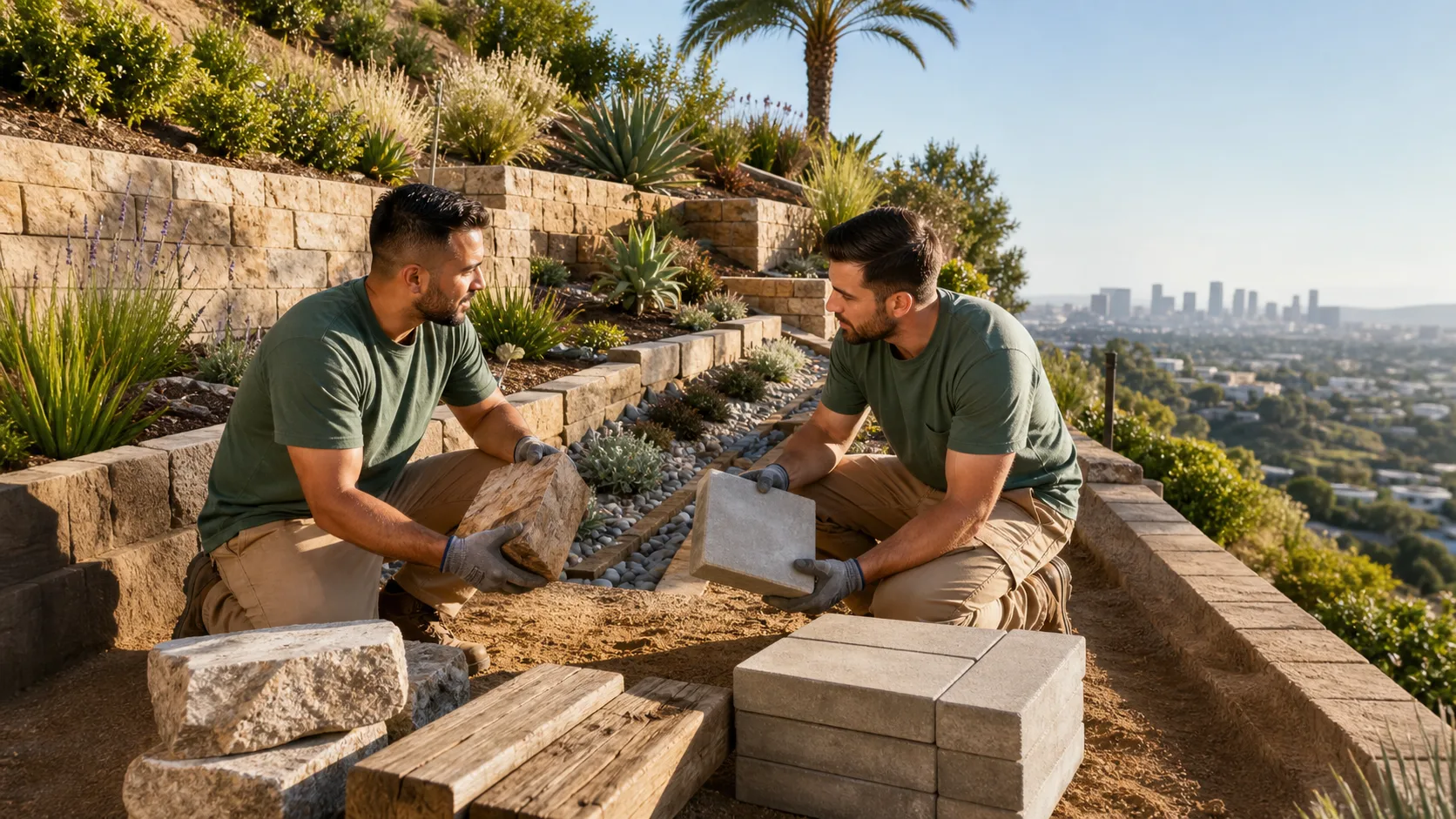
- Interlocking pavers and wall blocks, which stack into terraces and curved beds
- Natural stone, which gives a more rustic look with strong weight and texture
- Poured concrete, which can form very strong, simple walls on sharp grades
Interlocking blocks and pavers are popular because they lock together, spread out pressure, and can create steps, planters, and sitting walls that all work together. Natural stone fits well into informal, planted hillsides and can blend into rock mulch and boulders. Concrete can be a good choice when you need a strong, simple wall along driveways or narrow side yards.
Organic and flexible options work better on gentler slopes or within terraced levels. These include:
- Wood framing for raised beds
- Composite lumber that resists rot
- Steel or metal edging for clean planting lines
Wood is warm and familiar, but sun and irrigation will break it down faster. Composite boards last longer, which matters in our strong sun. Steel edging is great for holding soil and mulch on smaller changes in elevation, like the edge of a path or the front of a shallow bed.
Then there are the materials you do not see right away: the base and the fill. Stable hillside beds usually use:
- Base gravel or road base under walls and heavy beds
- Drainage rock behind retaining walls and at the bottom of deep beds
- Blended planting soil that drains well but still holds moisture
These hidden layers help keep wall blocks from shifting, give water a place to move, and create a better home for roots.
How to Pick the Right Material for Your Slope
The steeper and taller the hill, the more you should think in terms of small retaining walls instead of simple raised beds. Some general ideas:
- Gentle slopes or short drops often work with raised beds, wood or composite frames, and steel edging.
- Medium slopes may need low block or stone walls to form level planting pockets.
- Steep or tall slopes usually call for engineered retaining systems and professional installation.
Style plays a part too. Smooth pavers and straight concrete edges lean more modern. Natural stone and mixed gravel feel more relaxed. Wood sits somewhere in the middle.
Think about:
- How much sun will hit your materials all day
- How often you want to maintain or replace them
- Whether you want soft, curved lines or sharp, straight edges
In our climate, it also helps to look at how materials handle heat and water. Permeable joints between blocks and stone let some water pass. Lighter colors reflect more sun and stay cooler. Most hillside beds work best with drip irrigation and drought-tolerant plants, so choose materials that work easily with hidden tubing and emitters.
Building Terraces and Beds That Stay Put
Even the best garden bed materials fail without good prep. On a slope, that usually means taking the time to
- Shape the hillside into steps or gentle terraces
- Compact the soil so walls and beds have a firm base
- Lay base rock and level it below blocks, pavers, or concrete
- Add drainage rock behind taller walls and in low spots
Good erosion control is just as important as strength. Retaining blocks and terraced steps slow water. Rock mulch, gravel paths, and stone swales (shallow channels) help guide runoff in safe ways. Groundcovers and deep-rooted shrubs hold soil in place year-round.
Safety and codes come into play as soon as walls get higher, or when you are close to a property line or structure. For taller walls or places where a failure could affect a house, driveway, or neighbor’s yard, it is smart to bring in a structural professional and check local building rules.
Fall Planting Tips for New Hillside Garden Beds
For Los Angeles, October is a sweet spot for new hillside beds. Days are still warm, nights are cooler, and the rainy season is closer. Plants get time to make roots into your fresh soil mix before they face another long, dry summer.
Good plant choices for sloped beds often include:
- Deep-rooted native shrubs and perennials for structure
- Low groundcovers to hold soil between larger plants
- Tough ornamental grasses that sway but stay put
- Edibles like herbs, greens, or berries in the flatter terrace levels
Group plants by water needs, with thirstier ones closer to your hose or main irrigation lines. Place sun lovers on the brighter faces of the hill and save shadier pockets for plants that like softer light.
Drip irrigation works especially well on terraces. You can run lines along each level and use emitters or inline tubing to match each plant group. A generous layer of mulch over your planting soil helps keep moisture in and cuts surface erosion. In some spots, gravel or stone topdressing is a smart choice, adding grip underfoot and protecting soil from heavy raindrops while tying into your hardscape.
When all of these pieces come together, the right garden bed materials, smart layout, and fall planting window can turn even a steep Los Angeles hillside into a stable, green space that feels good to use and look at.
Get Started With Your Project Today
Transform your outdoor space with Mr. Pavers using the right garden bed materials for your design and budget. We will walk you through options, answer your questions, and help you choose a solution that fits your yard and lifestyle. When you are ready to move forward, simply contact us to schedule a consultation and get a detailed plan for your project.