Value of Concrete Splash Blocks in Los Angeles Patio Design
Protect Your Los Angeles Patio From Hidden Water Damage
Good patio design in Los Angeles is not just about pretty pavers and nice furniture. It is also about where water goes every time your gutters drain. Even in a dry climate, the few rainy days we get can do a lot of damage when runoff is not guided the right way.
When downspouts dump water right next to your patio, it can stain concrete, wash sand out from under pavers, and slowly create small cracks. Over time, that can lead to sinking spots, loose edges, and messy puddles. Concrete splash blocks are a simple, low-profile way to steer water away from your patio and keep your space looking clean and solid for years.
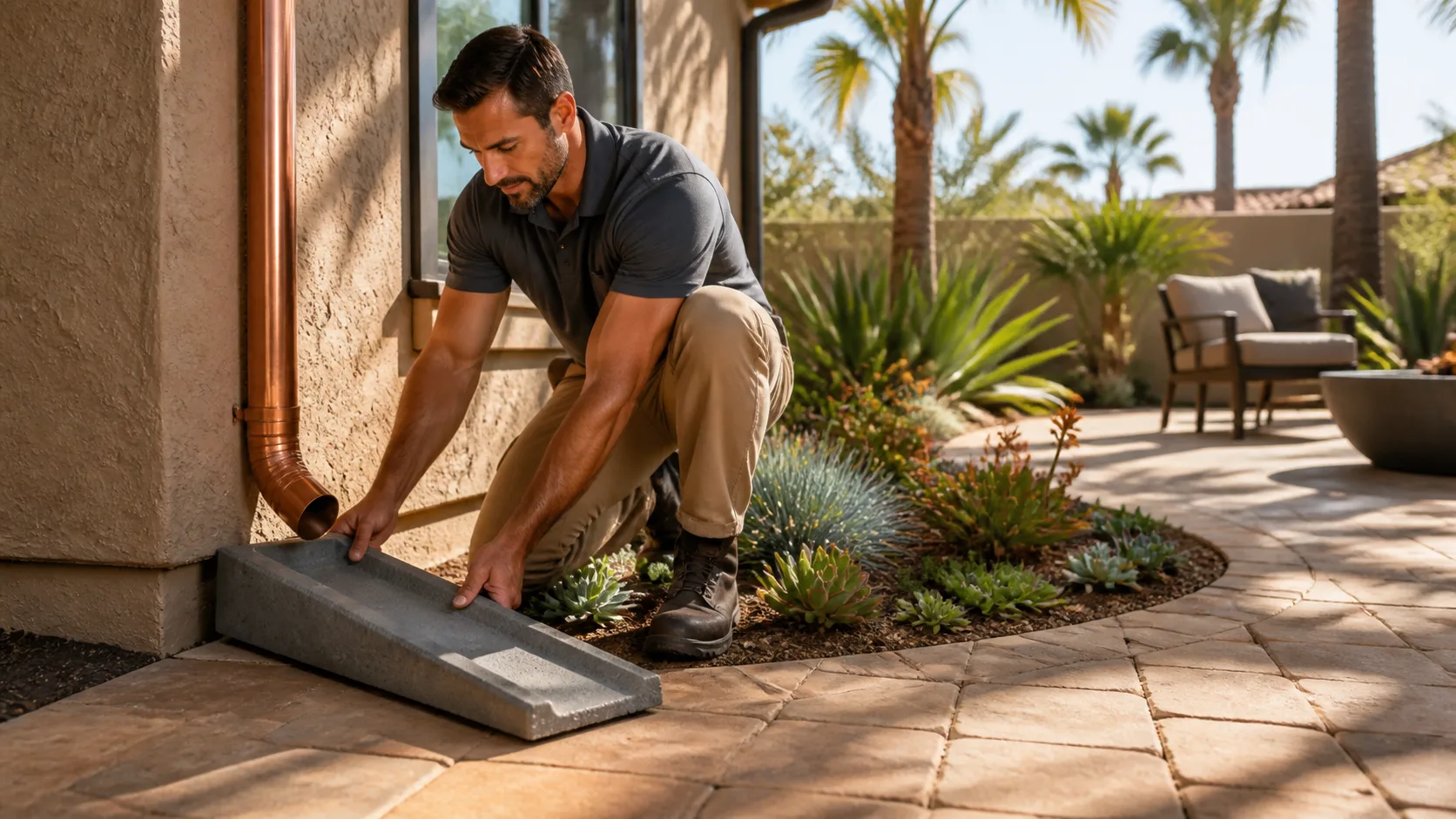
Concrete splash blocks sit under your downspouts and catch the roof runoff, then guide it away in a controlled path. They help protect patios, walkways, and garden beds from that sudden rush of water that often hits during fall and winter storms in Southern California.
Why Concrete Splash Blocks Matter in LA Patio Design
Los Angeles may not get rain very often, but when it comes, it tends to come hard and fast. Roofs collect a lot of water in a short time, and all of that flow gets pushed through your gutters and downspouts into just a few small spots.
Without splash blocks, that water can:
- Erode soil around patio edges
- Undercut pavers or concrete slabs
- Create muddy areas near pool decks and outdoor kitchens
- Splash dirt onto walls, doors, and patio surfaces
Concrete splash blocks help move that concentrated runoff several feet away from your patio, slab foundation, or pool deck. By spreading the flow out more gently, they reduce erosion and standing water near your outdoor living areas.
In water conscious LA yards, many people rely on drip irrigation, mulch, and carefully placed planting zones. Harsh runoff can rip mulch away, knock emitters out of place, and flatten young plants. Directing water with splash blocks helps protect those systems, so your planting beds stay neat instead of washed out after every storm.
Design Benefits of Concrete Splash Blocks Around Patios
Concrete splash blocks do not have to look like an afterthought. With a little planning, they can fit right into your patio design and help it look more intentional.
Here are a few design-friendly ways to use them:
- Align splash blocks with paver patterns so they sit in a joint line
- Aim them into gravel strips that run along the patio edge
- Blend them into stepping stone paths or garden borders
By positioning and angling each splash block, you can gently guide water toward features you already have or want to add, such as:
- Decorative dry creek beds with river rock
- Narrow gravel drains along a fence or wall
- Simple bioswales or planting zones that like a little extra water
You can also coordinate colors and textures. Many patios in Los Angeles use neutral tones like gray, tan, or warm stone shades. Choosing splash blocks that blend with:
- Concrete pavers
- Decorative rock or pebbles
- Stone edging or caps
helps everything feel like one complete design instead of a mix of random pieces.
Choosing the Right Splash Blocks for Los Angeles Homes
When you are choosing splash blocks for a patio in our area, concrete is often a better choice than thin plastic options. The strong sun, foot traffic, and yard maintenance can be tough on light materials. Concrete holds up to UV exposure and is less likely to warp, crack, or blow away.
Size and shape matter too. A few things to think about:
- Roof size: Bigger roof sections usually mean more runoff, so they may need longer or wider blocks
- Gutter height: Taller downspouts can create a stronger splash, so sturdy concrete helps contain that energy
- Distance to patios or decks: If your downspout is close to your living area, a longer block can push water further away
In Los Angeles, we also deal with Santa Ana winds and long stretches of dry weather. Heavier concrete splash blocks are less likely to shift in the wind or move when someone bumps them with a mower or garden tool. They also pair nicely with permeable paver areas and gravel bands, sitting flat and stable on a compacted base.
Simple Installation Tips for DIY Homeowners and Pros
Good placement is just as important as the splash block itself. The goal is always the same: catch the runoff and move it away from structures and patio edges.
Basic guidelines include:
- Center the splash block directly under the downspout opening
- Make sure the block slopes gently away from the building and patio
- Aim the outlet end toward a safe drainage area, not a neighbor’s yard
Preparing a solid base helps the block stay put and work correctly. A simple method is:
- Remove any loose soil or grass where the block will sit
- Add a thin layer of compacted gravel or sand
- Set the block so it is level side to side, with a slight tilt away from the structure
This keeps the splash block from rocking or sinking when it gets hit with heavy water flow. Many homeowners and pros also like to combine splash blocks with other drainage pieces during fall patio touch-ups, such as:
- French drains to carry water underground
- Channel drains along the edge of a slab or garage
- Decorative river rock beds that act as both style and drainage
Planning these together gives your patio a cleaner look and helps manage water more effectively.
Pairing Splash Blocks with Mr. Pavers Materials
At Mr. Pavers, we focus on job-ready hardscape and landscape materials that work together, so your drainage details and your patio design feel like one clear plan. Concrete splash blocks are a small part of that, but they connect nicely with a lot of other materials.
Some smart combinations include:
- Concrete splash blocks feeding into gravel strips between pavers, so runoff disappears neatly into the gaps
- Turf edges protected with stone borders, keeping water from washing soil onto your artificial grass or lawn
- Stone veneers on low walls, paired with clean drainage paths that prevent dirt streaks and stains under downspouts
Because we supply pavers, gravel, turf, and stone, it is easier to match colors and textures from one project zone to the next. That way, your patio, paths, planting beds, and drainage details all feel like they belong together, not like they were added at different times.
Get Your Patio Rain Ready Before Storm Season Hits
Fall is the perfect time in Los Angeles to look at your gutters, downspouts, and patio edges and ask a simple question: where will the water go when the first real storm hits? A quick walk around your yard after running a hose at each downspout can show weak spots before they turn into stains, puddles, or loose pavers.
When you are ready to fine-tune your patio drainage with concrete splash blocks, it helps to gather a few basics first, like photos of your downspouts, rough measurements of your patio, and notes about how water currently moves across your yard. With that information, our team at Mr. Pavers can help you match the right splash blocks with pavers, gravel, and stone so your patio looks clean and stays protected through every stormy day.
Get Started With Your Project Today
If you are ready to protect your foundation and improve drainage around your home, we can help you choose and install the right concrete splash blocks for your property. At Mr. Pavers, we focus on long-lasting solutions that look good and perform in all seasons. Share a few details about your project and we will walk you through your best options. Have questions or want a quote fast? Just contact us and we will follow up promptly.