Questioning Brick Garden Ideas for Sloped Los Angeles Yards
Rethinking Brick Gardens on LA Slopes This Summer
Brick garden ideas are all over social media right now, especially as people get their yards ready for summer hangouts. Brick paths, brick planters, brick steps, it all looks warm and classic. On a flat yard, a lot of those ideas can work pretty well with the right base and layout.
On a sloped Los Angeles yard, things are different. Hillsides bring erosion, drainage problems, hard sun, and tricky access for both people and materials. That means many all-brick plans that look great in photos can turn into cracked steps, sliding tiers, and muddy messes after the first big rain. Here, we want to help you slow down, question those garden brick ideas, and shape them into something safer, longer-lasting, and easier to live with.
We work with hardscape materials every day, and we see what holds up on LA slopes and what falls apart. Our goal is to help both DIY homeowners and contractors in our area pick smarter layouts and materials so sloped yards feel solid, not stressful.
When Brick Makes Sense on a Slope and When It Doesn’t
Brick can still play a role on a hillside; it just needs the right job. It is better as a finish material than as the main structure that holds back soil.
Brick often makes sense on sloped yards for things like:
- Small garden paths that cut across gentle slopes
- Short risers in steps where the core is concrete or block
- Edging around planting beds or gravel areas
- Low decorative borders that are not holding back heavy soil
Where brick becomes risky is where the slope is steep or the soil moves a lot. On many Los Angeles hillsides, we see:
- Tall retaining walls made only of brick starting to bulge or crack
- Brick terraces slowly separating as the ground shifts
- Brick features failing in areas that get heavy runoff or minor mudslides
Southern California also has regular ground movement and seismic activity. That constant tiny shifting adds stress to any hardscape. Bricks are small units with many joints, so there are many spots where things can open up. For taller walls, big level changes, or anything that needs real structural strength, people are often better off with engineered wall blocks, poured concrete, or heavier stone, and then using brick more as an accent layer where the loads are lighter.
Smarter Terraces and Steps for Sloped LA Gardens
Terraces and steps are usually the heart of any sloped garden plan. This is where choosing the right material mix matters most.
For terraces and planting tiers, people often compare:
- Brick
- Concrete pavers
- Interlocking wall blocks
- Natural stone
Concrete pavers and wall blocks are made to lock together with tight spacing and strong bases. Many systems are designed for load-bearing use, so they handle pressure from soil and foot traffic better than loose brick. Natural stone, when set correctly, can also give a solid, long-term structure with a more organic look.
Good terraces should:
- Slow down water so it does not rip the hill apart
- Give plants deeper, more stable soil
- Create flat zones for chairs, planters, or kids to play
- Keep paths and steps safe, not slippery or uneven
Poorly built brick tiers, especially with little base prep, usually crack, tilt, or wash out on LA slopes. A smarter approach is to build the strength with pavers, block, gravel, and base materials that are made for retaining and stepping. Then brick can come in as a skin or trim. That way, you still get that classic red or warm-toned look without asking brick to do a job it is not great at on a hillside.
Heat, Drainage, and Maintenance Realities in LA Yards
Los Angeles sun can be tough on any hardscape, and brick is no exception. On a slope, the angle can make surfaces even hotter and brighter.
Here are a few heat and comfort points to keep in mind:
- Brick can hold heat into the evening, which may feel uncomfortable on bare feet
- Darker bricks soak up more sun, lighter tones can reflect more glare
- Cooler-toned pavers or mixed stone may feel nicer to walk on during long summer days
Drainage is another big deal on hillsides. Solid brick surfaces with tight joints can act like a slide for water if they are not paired with ways for water to soak in or move out safely. Without drainage planning, runoff can:
- Wash soil out around steps and walls
- Undercut the base under brick paths
- Push water toward your home or your neighbor’s yard
Adding gravel beds, drains, or permeable joints between units can help control that flow, but they need to be planned from the start. The base under everything matters just as much as what you see on top.
Maintenance is also different on a slope. On angled surfaces, dirt and organic matter settle in joints. That can turn into:
- Weed growth between bricks or pavers
- Slippery moss or algae where there is shade and moisture
- Uneven surfaces as some bricks lift or settle over time
Using quality, well-draining gravel and base materials under your hardscape gives water a place to go and helps keep surfaces flatter and cleaner longer, especially on steeper grades.
Adapting Garden Brick Ideas for Style and Safety
The goal is not to give up on your favorite garden brick ideas. It is to tweak them so they make sense for a sloped Los Angeles yard.
A few smart ways to adapt brick on a hillside include:
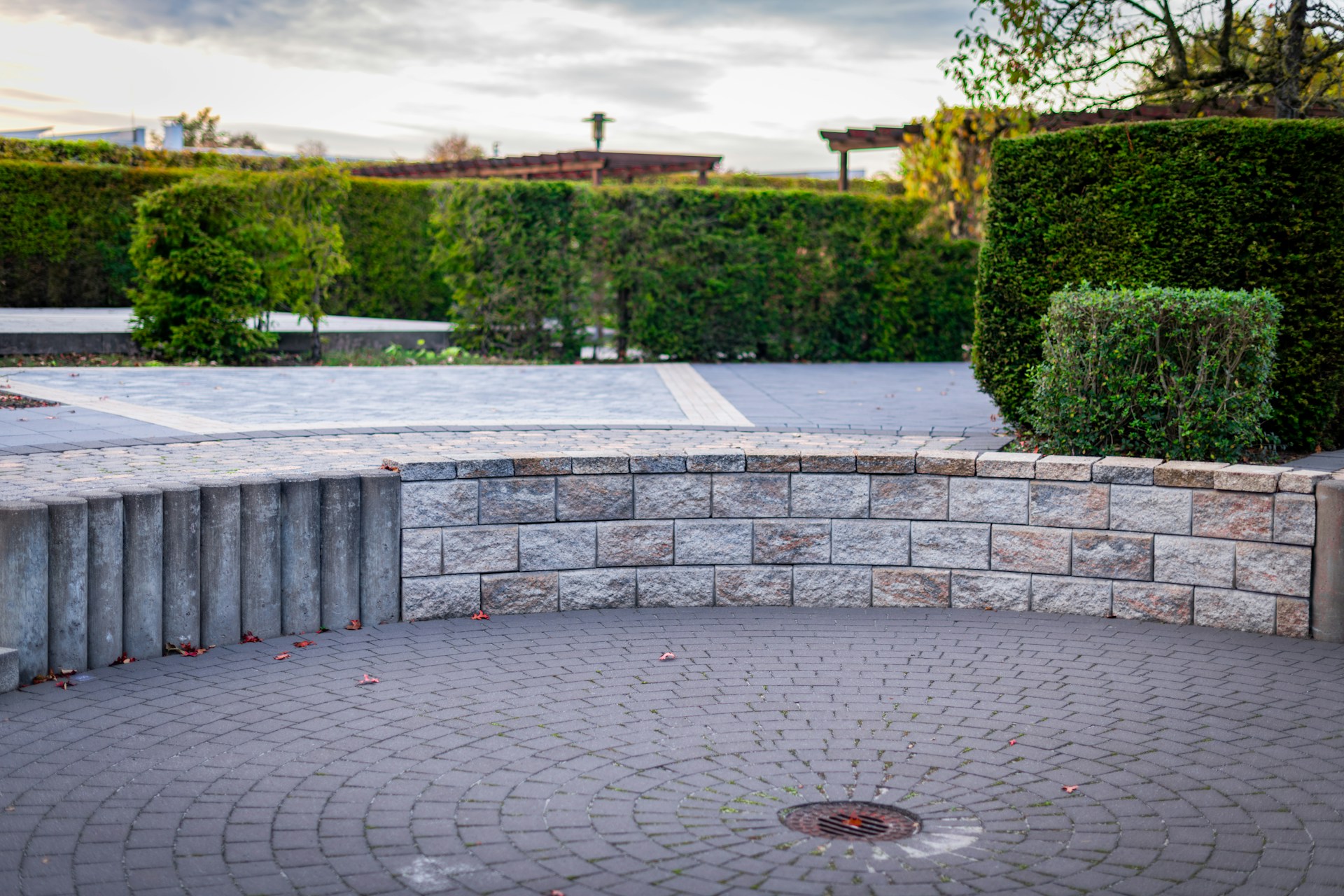
- Brick as a finish layer over a concrete or block wall, so it looks classic but the strength comes from inside
- Brick riser faces on concrete or block steps, with paver or stone treads on top
- Brick borders around concrete paver patios or landings on different levels
- Brick bands or insets within gravel or paver paths to break up large surfaces
With this kind of mix, brick gives warmth and character, while the main structure relies on pavers, gravel, wall systems, or stone that handle slope pressure better.
It also helps to think past summer. Your yard has to handle dry months, random heavy rains, and lots of year-round use. Planning for drainage, safe walking surfaces, and easy cleaning will keep those brick accents and hardscape features looking good and working well long after the first season of backyard parties is over.
Plan Your Slope-Friendly Hardscape with Local Pros
Before anyone goes all-in on a full brick buildup up a hillside, it is worth slowing down. Sketch the slope, mark the steepest parts, and think about where people actually walk, sit, and plant. Many homeowners find it helpful to talk through ideas with a contractor who understands local codes and hillside rules, especially for taller walls and deep cuts into the slope.
From there, choosing the right mix of brick, pavers, gravel, wall systems, and stone becomes much simpler. A local, pro-grade hardscape supplier that focuses on Los Angeles projects can walk you through which materials handle slopes better, which ones stay cooler in the sun, and how to support your favorite brick looks without risking early failure. With some planning, your garden brick ideas can turn into a sloped yard that feels safe, solid underfoot, and ready for summer gatherings for years to come.
Get Started With Your Project Today
If you are ready to bring your outdoor space to life, explore our curated garden brick ideas and see what is possible for your yard. At Mr. Pavers, we work closely with you to choose styles, layouts, and finishes that match your vision and budget. Share a few details about your project and we will recommend options tailored to your space. Have questions or want to schedule a consultation now? Simply contact us and we will follow up promptly.